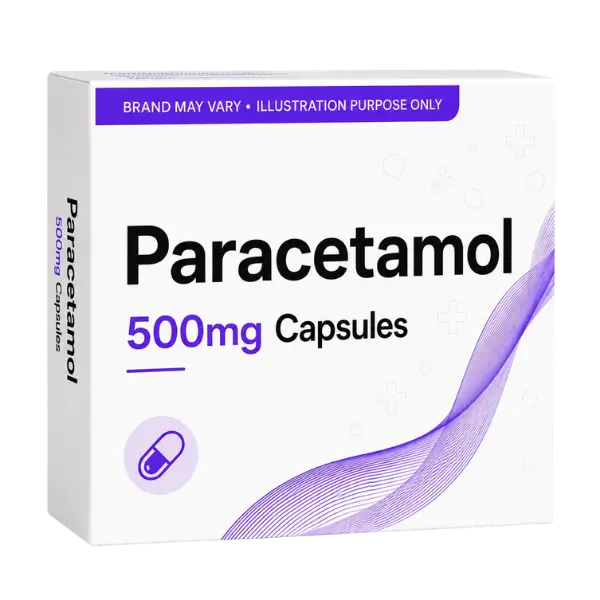
Paracetamol Capsules 500mg
Fast-acting pain relief for headaches, fever, and mild to moderate aches.
- Contains 500mg of paracetamol per capsule
- Relieves headaches, toothache, and muscular pain
- Helps reduce fever and cold or flu symptoms
- Gentle on the stomach when used as directed
- Suitable for adults and children over 12 years old
| Active Ingredient | — |
| Strength | — |
| Size | — |
| Flavour | — |
Effective Relief from Pain and Fever
Paracetamol Capsules Overview
Paracetamol Capsules 500 mg are a widely used analgesic and antipyretic medicine for the relief of mild to moderate pain and fever. They are commonly taken for headaches, dental pain, muscular aches, period pain and symptoms associated with colds and flu.
In the UK, paracetamol capsules are available as an over-the-counter pharmacy medicine, suitable for short-term use in adults and older children (age guidance applies).
Understanding Pain and Fever
Why pain occurs
Pain is the body’s response to injury, inflammation or illness, triggered by chemical messengers that stimulate nerve endings. Reducing these signals helps relieve discomfort and improve day-to-day function.
Why fever develops
Fever occurs when the body’s temperature-regulating centre raises body temperature in response to infection or inflammation. Lowering fever can improve comfort and wellbeing.
What Are Paracetamol Capsules?
Paracetamol is a non-opioid painkiller with analgesic and antipyretic properties. Capsule formulations are designed to be easy to swallow and allow the medicine to be absorbed efficiently.
Paracetamol does not reduce inflammation, which makes it suitable for people who cannot take anti-inflammatory medicines.
How Does Paracetamol Work?
Central pain relief
Paracetamol works primarily in the central nervous system, reducing the production of prostaglandins involved in pain and temperature regulation. This helps lower pain perception and reduce fever.
Onset and duration
Relief typically begins within 30–60 minutes, with effects lasting several hours depending on dose and individual response.
What Paracetamol Helps With — and What It Does Not
What it helps with
Paracetamol Capsules are used to relieve:
- headaches and migraines
- dental pain
- muscular aches and pains
- period pain (dysmenorrhoea)
- back pain
- fever
- cold and flu symptoms
They are suitable for short-term symptom relief at the lowest effective dose.
What it does not treat
Paracetamol does not:
- reduce inflammation
- cure infections
- treat severe or chronic pain on its own
- replace medical assessment for persistent symptoms
Paracetamol Capsules Summary
Paracetamol Capsules 500 mg provide effective relief from pain and fever with a well-established safety profile when used correctly. They are a first-line option for managing everyday aches, pains and illness-related discomfort.
Persistent or severe symptoms should always be assessed by a healthcare professional.
Active Ingredients
Paracetamol
How to Take Paracetamol Capsules
Swallow capsules with water, spacing doses evenly throughout the day. Do not exceed the recommended dose and avoid taking other paracetamol-containing products at the same time.
Safety, Warnings and Side Effects
Paracetamol is generally well tolerated when used correctly. Exceeding the recommended dose can cause serious liver damage, even if no symptoms are immediately apparent.
Always follow dosing instructions carefully.
When to Seek Medical Advice
Speak to a GP or pharmacist if:
- pain or fever persists
- symptoms worsen
- you need pain relief for several days
- an overdose is suspected
Immediate medical attention is required for suspected overdose.
Use in Pregnancy and Breastfeeding
Paracetamol is commonly used during pregnancy and breastfeeding on professional advice, as it is generally considered first-line for pain and fever when used appropriately.
Who Are Paracetamol Capsules For?
Paracetamol Capsules may be suitable for:
- adults and older children (check age guidance)
- people who cannot take NSAIDs
- individuals needing pain or fever relief with good tolerability
A pharmacist can advise on dosing and suitability.
Who Should Avoid Paracetamol
Paracetamol should not be used if:
- you are allergic to paracetamol
- you have severe liver disease without medical advice
Caution is required in people with liver problems or those who consume large amounts of alcohol.
How Paracetamol Compares to Other Painkillers
Paracetamol vs ibuprofen
Paracetamol relieves pain and fever but does not reduce inflammation. Ibuprofen treats inflammation but may not be suitable for everyone.
Paracetamol vs combination painkillers
Combination products may offer stronger relief but carry additional risks. Paracetamol alone is often recommended first.
Reviews (5.0/5 stars based on 1 reviews)
At Elite Meds, we provide simple, reliable and fast delivery for all orders. We use Royal Mail exclusively, based on consistent performance and strong customer satisfaction across our website and eBay stores.
Delivery Options
Royal Mail Tracked 48 – £3.99
Royal Mail Tracked 24 – £4.49
Delivery timeframes are estimates provided by Royal Mail and are not guaranteed.
Dispatch Times
- Orders placed before 3pm Monday to Friday are dispatched the same working day.
- Orders placed after 3pm, on weekends or bank holidays are dispatched the next working day.
See our full delivery policy here
You May Like These
View All


Thomas Reed ·
Good quality product at a fair price. The capsules are easy to swallow and worked quickly for headaches and general aches.