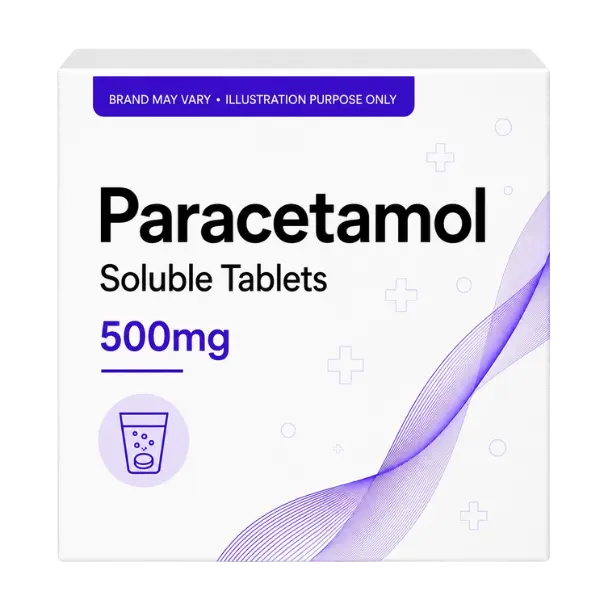
Paracetamol Soluble Tablets 500mg
Dissolvable pain relief tablets for everyday aches and pains
- Relieves everyday aches and pains.
- Dissolvable in water.
- Relieves muscular pains.
- Relieves headaches.
- Fast-acting relief.
| Active Ingredient | — |
| Strength | — |
| Size | — |
| Flavour | — |
Fast-Acting Pain and Fever Relief
Paracetamol Soluble Tablets Overview
Paracetamol Soluble Tablets are an analgesic and antipyretic medicine used to relieve mild to moderate pain and reduce fever (pyrexia). They are designed to dissolve in water before use, allowing the medicine to be absorbed more quickly than standard tablets and making them easier to take for people who struggle with swallowing.
In the UK, paracetamol soluble tablets are an over-the-counter medicine suitable for short-term use in adults and children (depending on strength), when taken according to the instructions.
Understanding Pain and Fever
How paracetamol relieves pain
Pain signals are processed in the central nervous system. Paracetamol works by reducing the perception of pain in the brain and spinal cord, rather than acting directly at the site of injury or inflammation. This makes it suitable for a wide range of everyday aches and pains.
How paracetamol reduces fever
When the body detects infection or inflammation, it can raise its internal temperature. Paracetamol helps lower fever by acting on the thermoregulatory centre in the brain, helping the body return to a normal temperature.
What Are Paracetamol Soluble Tablets?
Paracetamol Soluble Tablets contain paracetamol, dissolved in water before being taken as a drink. This formulation allows:
- quicker absorption
- easier swallowing
- a useful option for people with sore throats, nausea, or difficulty taking solid tablets
They are commonly used when rapid relief is desired or when standard tablets are not suitable.
How Do Paracetamol Soluble Tablets Work?
Mechanism of action
Paracetamol works centrally by:
- inhibiting pain signal pathways in the brain
- reducing fever by acting on the hypothalamus
Unlike NSAIDs such as ibuprofen, paracetamol does not significantly reduce inflammation.
Why the soluble format can help
Because the tablet is already dissolved, the medicine does not need to break down in the stomach. This can result in:
- faster onset of action
- more predictable absorption
- improved ease of use
What Paracetamol Soluble Tablets Treat — and What They Do Not
What they help with
Paracetamol Soluble Tablets are commonly used to relieve:
- headache and migraine
- toothache
- back pain
- muscular aches and pains
- period pain (dysmenorrhoea)
- sore throat
- fever associated with colds and flu
What they do not treat
Paracetamol does not:
- reduce inflammation
- treat the underlying cause of pain
- relieve severe or persistent pain on its own
If symptoms continue, further assessment may be required.
Paracetamol Soluble Tablets Summary
Paracetamol Soluble Tablets provide effective short-term relief of pain and fever in a format that is easy to take and quickly absorbed. When used as directed, they are a safe and widely used option for managing everyday pain and acute illness.
Persistent or severe symptoms should always be assessed by a healthcare professional.
Active Ingredients
Paracetamol
How to Take Paracetamol Soluble Tablets
Dosage and administration
- Dissolve the tablet completely in a glass of water
- Allow it to stop fizzing before drinking
- Dosage depends on age and product strength
Always follow the instructions on the packaging.
Important usage advice
- Do not exceed the stated dose
- Leave the recommended time between doses
- Avoid taking multiple products containing paracetamol
Safety, Warnings and Side Effects
Common side effects
Paracetamol is generally very well tolerated when used correctly. Side effects are uncommon at recommended doses.
Paracetamol safety
Taking more than the recommended amount can cause serious liver damage, which may not produce immediate symptoms. This is why it is essential to:
- never exceed the maximum daily dose
- avoid combining with other paracetamol products
- seek urgent help if overdose is suspected
When to Seek Medical Advice
Speak to a GP or pharmacist if:
- pain lasts longer than 3 days
- fever persists beyond 3 days
- symptoms worsen or change
- pain keeps returning
- you are unsure about dosing
Urgent medical attention is required if overdose is suspected.
Use in Pregnancy and Breastfeeding
Paracetamol is generally considered the first-choice pain relief during pregnancy, when used at the lowest effective dose for the shortest possible time. Breastfeeding women can usually take paracetamol, but should seek advice if unsure.
Who Are Paracetamol Soluble Tablets For?
Paracetamol Soluble Tablets may be suitable for:
- adults and adolescents (depending on strength)
- people who have difficulty swallowing tablets
- individuals needing short-term pain or fever relief
They are often chosen during acute illness, such as viral infections, where hydration and ease of administration are important.
Who Should Avoid Paracetamol Soluble Tablets
Paracetamol may not be suitable if:
- you are allergic to paracetamol
- you have severe liver disease
- you regularly consume excessive alcohol
- you are already taking other paracetamol-containing medicines
Always check labels carefully or ask a pharmacist for advice.
How Paracetamol Soluble Tablets Compare to Other Pain Relief
Soluble vs standard paracetamol tablets
Soluble tablets may act slightly faster and are easier to take, but contain the same active ingredient and provide similar overall pain relief.
Paracetamol vs ibuprofen
Ibuprofen has anti-inflammatory effects but may irritate the stomach or be unsuitable for some people. Paracetamol is often preferred when NSAIDs are not appropriate.
Supporting Recovery During Illness
Alongside paracetamol, recovery may be supported by:
- staying well hydrated
- resting adequately
- avoiding alcohol while unwell
- using additional measures such as warm fluids or gentle stretching
At Elite Meds, we provide simple, reliable and fast delivery for all orders. We use Royal Mail exclusively, based on consistent performance and strong customer satisfaction across our website and eBay stores.
Delivery Options
Royal Mail Tracked 48 – £3.99
Royal Mail Tracked 24 – £4.49
Delivery timeframes are estimates provided by Royal Mail and are not guaranteed.
Dispatch Times
- Orders placed before 3pm Monday to Friday are dispatched the same working day.
- Orders placed after 3pm, on weekends or bank holidays are dispatched the next working day.
See our full delivery policy here
You May Like These
View All


Reviews (0.0/5 stars based on 0 reviews)
There are no reviews yet.