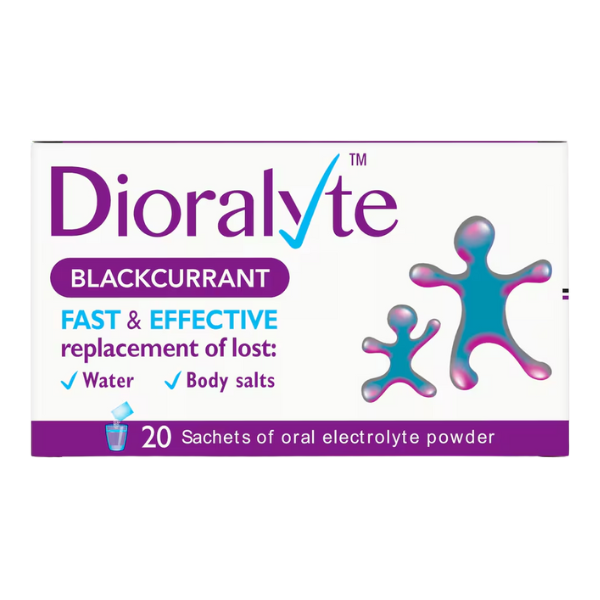
Dioralyte Sachets
Rehydration salts to help replace lost water and body salts
- Replaces lost water in the body.
- Replace lost body salts.
- Helps rehydrate the body.
- Easy to consume.
- Fast-acting treatment.
| Active Ingredient | — |
| Strength | — |
| Size | — |
| Flavour | — |
Overview
How do Dioralyte Sachets rehydrate the body effectively? Dioralyte Sachets are a scientifically balanced formula designed to treat fluid and electrolyte loss associated with acute diarrhoea. When the body suffers from diarrhoea, it loses not only water but also vital mineral salts known as electrolytes, specifically sodium, potassium, and chloride. Drinking plain water is often insufficient to correct this imbalance because the inflamed intestine struggles to absorb water alone and may simply flush it straight through. Dioralyte Sachets contain a precise ratio of glucose and electrolytes. When Dioralyte Sachets are dissolved in water, the solution creates an optimal osmotic gradient. This allows the intestine to absorb fluids more efficiently than water alone, effectively replacing the lost salts and rapidly restoring the body’s hydration levels to preventing the dangerous consequences of dehydration.
Why is the glucose content in Dioralyte Sachets critical? The glucose contained in Dioralyte Sachets serves a specific physiological function beyond providing energy. It acts as a carrier molecule to facilitate the absorption of sodium. The lining of the human intestine contains a specific protein channel known as the Sodium-Glucose Co-Transporter (SGLT1). This transporter works like a pump that pulls sodium and glucose simultaneously from the gut into the bloodstream. Crucially, water molecules follow this sodium movement through a process called osmosis. By including glucose, Dioralyte Sachets activate this pump, which forces the body to absorb water even when the digestive system is compromised by infection or inflammation. Without the glucose found in Dioralyte Sachets, the electrolytes would not be absorbed as effectively, and rehydration would be significantly slower.
Usage Instructions
How to prepare Dioralyte Sachets correctly? To ensure Dioralyte Sachets work effectively, the solution must be mixed to the exact concentration required.
Preparation: The user should empty the contents of one Dioralyte Sachet into a glass.
Mixing: Add exactly 200ml of fresh drinking water. For infants or young children, the water should be freshly boiled and then cooled before adding the powder.
Dissolving: Stir the mixture until the powder has completely dissolved.
Important: Users must not dissolve Dioralyte Sachets in fizzy drinks, fruit juices, or milk, as the extra sugar and minerals in these liquids will disrupt the precise electrolyte balance needed for optimal absorption. The solution must not be boiled after mixing.
What is the recommended dosage for Dioralyte Sachets? The number of Dioralyte Sachets required depends on the severity of the dehydration.
Adults and children: The general recommendation is to drink one prepared Dioralyte Sachet after every loose bowel movement.
Infants: The volume is usually calculated based on the baby’s weight, typically 1 to 1.5 times the normal feed volume.
How should prepared Dioralyte Sachets be stored? Once prepared, the solution made from Dioralyte Sachets should be consumed within one hour. If immediate consumption is not possible, the solution can be stored in a refrigerator for up to 24 hours. Any solution remaining after 24 hours must be discarded to prevent bacterial growth.
Warnings
When must Dioralyte Sachets not be used? Dioralyte Sachets must not be used by patients suffering from intestinal obstruction or a perforated bowel. Dioralyte Sachets are not suitable for individuals with severe kidney or liver disease, as the body may be unable to process the electrolytes contained in the product. Patients on a low-sodium or low-potassium diet must consult a doctor before using Dioralyte Sachets, as the product adds significant amounts of these minerals to the diet. Dioralyte Sachets must not be used by anyone with a known allergy to any of the ingredients, or by those with rare hereditary problems of fructose intolerance or glucose-galactose malabsorption.
Safety advice regarding severe dehydration and Dioralyte Sachets? While Dioralyte Sachets are effective for mild to moderate dehydration, they are not a substitute for emergency medical care in severe cases. If an infant or elderly person shows signs of severe dehydration, such as drowsiness, confusion, rapid breathing, or a complete lack of urine output, medical attention must be sought immediately. If symptoms persist for more than 24 to 48 hours despite using Dioralyte Sachets, a doctor should be consulted.
Who Is It For
Who are Dioralyte Sachets suitable for? Dioralyte Sachets are suitable for adults, the elderly, and children. Dioralyte Sachets are specifically indicated for the treatment of fluid and electrolyte loss caused by acute diarrhoea or excessive sweating. Dioralyte Sachets are an essential addition to any travel first aid kit, particularly for individuals visiting countries where “traveller’s diarrhoea” is common. Dioralyte Sachets can be used for infants aged between 3 months and 1 year, but this should ideally be done under the supervision of a doctor to ensure the underlying cause of the fluid loss is being managed correctly.
Alternatives
Common alternatives to Dioralyte Sachets? If Dioralyte Sachets are not suitable due to taste or specific dietary needs, common alternatives include:
Dioralyte Relief Sachets: Contains rice powder instead of glucose, which helps to reduce the duration of diarrhoea and firm up the stools while rehydrating.
O.R.S Hydration Tablets: Effervescent tablets containing glucose and salts that dissolve in water to create a rehydration drink, often preferred for their convenience and variety of flavours.
Imodium (Loperamide) Capsules: An anti-motility medicine that stops the diarrhoea by slowing down the gut movement, although it does not replace lost fluids like Dioralyte Sachets.
Electrolade Sachets: A similar oral rehydration salt formulation to Dioralyte Sachets, often available as a generic alternative with comparable electrolyte levels.
At Elite Meds, we provide simple, reliable and fast delivery for all orders. We use Royal Mail exclusively, based on consistent performance and strong customer satisfaction across our website and eBay stores.
Delivery Options
Royal Mail Tracked 48 – £3.99
Royal Mail Tracked 24 – £4.49
Delivery timeframes are estimates provided by Royal Mail and are not guaranteed.
Dispatch Times
- Orders placed before 3pm Monday to Friday are dispatched the same working day.
- Orders placed after 3pm, on weekends or bank holidays are dispatched the next working day.
See our full delivery policy here


Reviews (0.0/5 stars based on 0 reviews)
There are no reviews yet.