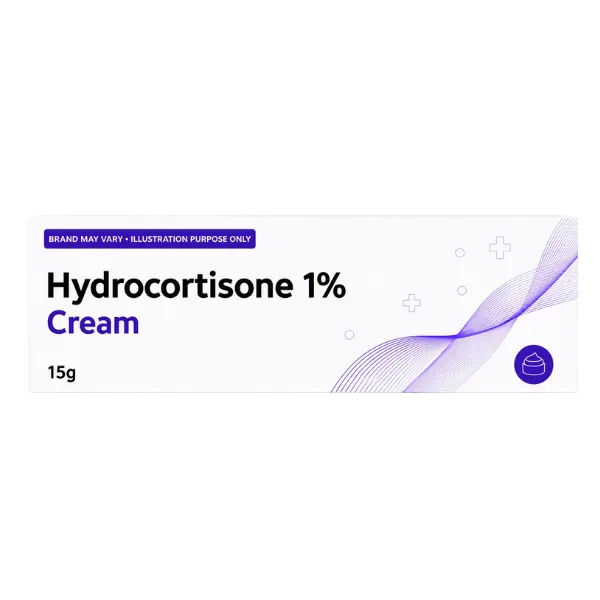
Hydrocortisone 1% Cream (15g)
Relieves itching, redness, and inflammation
- Reduces inflammation, redness, and itching caused by skin irritation
- Soothes mild eczema, dermatitis, and allergic reactions
- Contains hydrocortisone, a gentle corticosteroid for topical use
- Absorbs quickly to provide targeted relief to affected areas
- Suitable for short-term use on small patches of skin
£2.29 Available Free Delivery on Orders over £20!
In stock
| Strength | 1% |
| Size | 15 g |
Short-Term Relief from Itching, Redness and Skin Inflammation
Hydrocortisone 1% Cream Overview
Hydrocortisone 1% Cream is a mild topical corticosteroid used to relieve itching, redness, and inflammation associated with a range of minor skin conditions. It works by reducing the skin’s inflammatory response, helping calm irritation and restore comfort.
In the UK, hydrocortisone 1% cream is an over-the-counter medicine intended for short-term use under pharmacist guidance. It is commonly recommended when simple moisturisers alone are not sufficient.
Understanding Inflamed and Itchy Skin
Why skin becomes inflamed
Skin inflammation occurs when the immune system reacts to irritants, allergens, bites, or underlying skin conditions. This response releases inflammatory mediators that cause redness, swelling, heat, and itching.
Common triggers include contact with detergents or chemicals, allergic reactions, insect bites, and flare-ups of conditions such as eczema.
When a mild steroid is appropriate
Mild steroids like hydrocortisone are used when inflammation is causing significant discomfort and scratching, but the condition is localised and mild. They are not intended for long-term or widespread use.
What Is Hydrocortisone 1% Cream?
Hydrocortisone 1% Cream contains hydrocortisone, a low-potency corticosteroid suitable for treating mild inflammatory skin conditions. The cream formulation absorbs easily and is suitable for most areas of the body when used correctly.
It is often used alongside regular emollients to help manage flare-ups while supporting the skin barrier.
How Does Hydrocortisone 1% Cream Work?
Anti-inflammatory action
Hydrocortisone reduces inflammation by suppressing the release of inflammatory substances in the skin. This helps to:
- reduce redness and swelling
- relieve itching
- calm irritated skin
By settling inflammation, the skin is able to heal and recover.
Importance of limited use
Because corticosteroids affect immune activity in the skin, they should be used for short periods only. Prolonged or excessive use can lead to thinning of the skin or other side effects.
What Hydrocortisone 1% Cream Helps With — and What It Does Not
What it helps with
Hydrocortisone 1% Cream may be used to relieve symptoms of:
- mild eczema flare-ups
- contact dermatitis
- allergic skin reactions
- insect bites and stings
- mild inflammatory rashes
What it does not treat
Hydrocortisone does not:
- treat skin infections
- cure chronic skin conditions
- treat acne or rosacea
- replace moisturisers for daily skin care
If symptoms do not improve, reassessment is needed.
Hydrocortisone 1% Cream Summary
Hydrocortisone 1% Cream provides effective short-term relief from itching and inflammation associated with mild skin conditions. When used correctly and for limited periods, it helps calm irritated skin and restore comfort.
Persistent or worsening skin problems should always be reviewed by a healthcare professional.
Active Ingredients
Hydrocortisone
How to Use Hydrocortisone 1% Cream
Application guidance
- Apply a thin layer to the affected area
- Use once or twice daily
- Gently rub in until absorbed
Treatment is usually limited to up to 7 days, unless advised otherwise.
Practical usage advice
- Wash hands before and after application
- Avoid covering with airtight dressings unless advised
- Use the smallest amount needed to control symptoms
Safety, Warnings and Side Effects
Hydrocortisone 1% Cream is generally well tolerated when used as directed.
Possible side effects include mild irritation or burning on application. Prolonged use can cause skin thinning, particularly on delicate areas.
When to Seek Medical Advice
Speak to a GP or pharmacist if:
- symptoms do not improve within 7 days
- the skin becomes painful, weepy, or infected
- the condition spreads or worsens
- repeated courses are needed
These may indicate a need for alternative treatment.
Use on the Face and Sensitive Areas
Use on the face, groin, or underarms should be limited and cautious, and only on professional advice, as these areas absorb steroids more readily.
Who Is Hydrocortisone 1% Cream For?
Hydrocortisone 1% Cream may be suitable for:
- adults and children (check product-specific age guidance)
- people with mild, localised skin inflammation
- short-term management of flare-ups
It is commonly recommended following pharmacist assessment.
Who Should Avoid Hydrocortisone 1% Cream
Hydrocortisone may not be suitable if:
- you are allergic to hydrocortisone or any ingredients
- the skin is infected (bacterial, fungal, or viral)
- the condition affects broken skin or open wounds
- the rash involves acne, rosacea, or perioral dermatitis
Medical advice should be sought if unsure.
How Hydrocortisone 1% Compares to Other Skin Treatments
Hydrocortisone vs emollients
Emollients moisturise and protect the skin but do not reduce inflammation. Hydrocortisone directly targets inflammatory symptoms such as redness and itching.
Hydrocortisone vs stronger steroids
Hydrocortisone is a mild steroid. Stronger topical steroids are prescription-only and used under medical supervision for more severe conditions.
Supporting Skin Recovery
Alongside hydrocortisone use, regular application of fragrance-free moisturisers, avoiding known irritants, and protecting the skin barrier can help reduce future flare-ups.
At Elite Meds, we provide simple, reliable and fast delivery for all orders. We use Royal Mail exclusively, based on consistent performance and strong customer satisfaction across our website and eBay stores.
Delivery Options
Royal Mail Tracked 48 – £3.99
Royal Mail Tracked 24 – £4.49
Delivery timeframes are estimates provided by Royal Mail and are not guaranteed.
Dispatch Times
- Orders placed before 3pm Monday to Friday are dispatched the same working day.
- Orders placed after 3pm, on weekends or bank holidays are dispatched the next working day.
See our full delivery policy here

Reviews (0.0/5 stars based on 0 reviews)
There are no reviews yet.