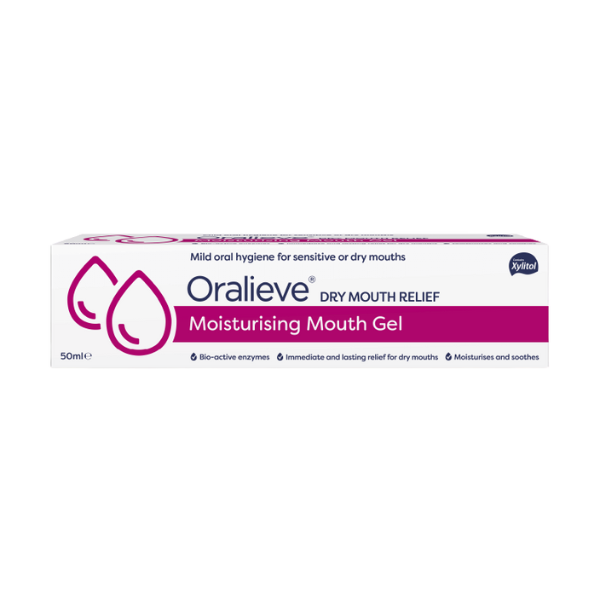
Oralieve Moisturising Mouth Gel (50ml)
Moisturises and soothes dry mouth
- Provides soothing relief for dry mouth symptoms
- Formulated to mimic natural saliva for lasting hydration
- Protects oral tissues and helps prevent irritation
- Pleasant, non-sticky gel texture for comfort
- Suitable for daily use, including overnight relief
£7.59 Available Free Delivery on Orders over £20!
In stock
| Size | 50 ml |
Long-Lasting Relief and Protection for Dry Mouth Symptoms
Oralieve Moisturising Mouth Gel Overview
Oralieve Moisturising Mouth Gel is a saliva substitute gel designed to relieve symptoms of dry mouth (xerostomia) by coating and lubricating the oral tissues. It provides prolonged comfort for people whose mouths feel dry, sore, sticky, or uncomfortable due to reduced saliva production.
In the UK, Oralieve Gel is classed as a medical device rather than a medicine and is suitable for frequent use throughout the day and night.
Understanding Dry Mouth
What causes dry mouth?
Dry mouth occurs when the salivary glands do not produce enough saliva to keep the mouth moist. Saliva plays a key role in:
- aiding speech and swallowing
- protecting teeth and gums
- maintaining oral comfort
- helping digestion
Reduced saliva can be caused by:
- medications (e.g., antihistamines, antidepressants)
- head and neck radiotherapy
- autoimmune conditions such as Sjögren’s syndrome
- dehydration or anxiety
- ageing changes in salivary function
Why dry mouth matters
Persistent dry mouth can increase the risk of dental caries, gum disease, oral candidiasis, and difficulty eating or speaking. It can also affect taste and overall quality of life.
What Is Oralieve Moisturising Mouth Gel?
Oralieve Gel is formulated to mimic the lubrication and protective effect of natural saliva. Unlike stimulants that prompt saliva production, Oralieve provides direct moisturisation and soothing when applied to the oral tissues.
The 50 ml gel format is ideal for daytime and bedtime use, offering extended relief.
How Does Oralieve Gel Work?
Moisturising and protective action
Oralieve Gel adheres to the mucosal surfaces of the mouth, forming a protective layer that helps:
- relieve dryness and soreness
- improve ease of speaking and swallowing
- reduce the sticky or burning sensation caused by dry mouth
- maintain moisture of the tongue, cheeks, and gums
Because the gel does not rely on stimulating saliva, it is suitable even when salivary gland function is limited.
Gel vs spray
Compared with sprays, gel formulations provide longer contact time, which can offer more sustained relief, especially overnight or during extended dry-mouth episodes.
What Oralieve Gel Helps With — and What It Does Not
What it helps with
Oralieve Gel may help relieve:
- persistent dry mouth
- sore, sticky, or burning mouth sensations
- difficulty swallowing due to dryness
- discomfort speaking or eating dry foods
- night-time dry mouth symptoms
What it does not treat
Oralieve Gel does not:
- cure the underlying cause of dry mouth
- stimulate salivary gland activity
- treat infections such as oral thrush
- replace professional dental or medical care when needed
If dry mouth persists or is severe, a healthcare professional should be consulted.
Oralieve Moisturising Mouth Gel Summary
Oralieve Moisturising Mouth Gel provides long-lasting, direct relief from dry mouth symptoms by coating and lubricating oral tissues. It is suitable for frequent use and supports everyday comfort when natural saliva is insufficient.
Persistent or severe dry mouth should be assessed by a healthcare professional.
How to Use Oralieve Moisturising Mouth Gel
Application guidance
- Apply a small amount of gel directly to the inside of the cheeks, gums, and tongue
- Spread gently with a clean finger or soft toothbrush
- Use throughout the day or at bedtime as needed
Practical usage tips
- Apply before meals or speaking for added comfort
- Use after brushing with a gentle toothpaste
- Do not swallow large amounts; use only as directed
Safety, Warnings and Side Effects
General tolerance
Oralieve Gel is non-medicated and generally very well tolerated.
Possible effects
Rarely, some people may notice a mild taste change or slight oral irritation. If this persists, discontinue use and seek advice.
When to Seek Medical or Dental Advice
Seek advice if:
- dry mouth is persistent or worsening
- there are frequent oral infections
- swallowing or speaking difficulties increase
- symptoms affect nutrition or quality of life
Dry mouth can be a sign of an underlying condition that may require assessment.
Use in Pregnancy and Breastfeeding
Oralieve Gel can generally be used during pregnancy and while breastfeeding. If symptoms are severe or persistent, professional guidance should be sought.
Who Is Oralieve Moisturising Mouth Gel For?
Oralieve Gel may be suitable for:
- adults experiencing persistent dry mouth
- people taking medicines that cause reduced saliva
- individuals post-radiotherapy to the head and neck
- those with chronic dry mouth conditions such as Sjögren’s syndrome
- people who require long-lasting lubrication
It is safe for frequent use and can be applied as often as required.
Who Should Avoid Oralieve Gel
Oralieve Gel is generally well tolerated. Avoid use if:
- you are allergic to any of the ingredients
- there is active oral infection or sores unless advised
If symptoms are severe or unresponsive to treatment, seek professional advice.
How Oralieve Gel Compares to Other Dry Mouth Options
Gel vs spray
Gels typically provide longer lasting relief due to extended adhesion to oral tissues, while sprays are more convenient for intermittent use.
Gel vs sugar-free gum or lozenges
Sugar-free gum or lozenges may stimulate salivary flow but depend on residual salivary gland function. Oralieve Gel delivers moisture and protection even when stimulation is ineffective.
Supporting Oral Health with Dry Mouth
Alongside symptom relief, good oral care is essential:
- brush twice daily with fluoride toothpaste
- attend regular dental check-ups
- stay well hydrated
- avoid sugary or acidic snacks
- consider fluoride rinses if advised
These steps help reduce the risk of caries and oral infections.
At Elite Meds, we provide simple, reliable and fast delivery for all orders. We use Royal Mail exclusively, based on consistent performance and strong customer satisfaction across our website and eBay stores.
Delivery Options
Royal Mail Tracked 48 – £3.99
Royal Mail Tracked 24 – £4.49
Delivery timeframes are estimates provided by Royal Mail and are not guaranteed.
Dispatch Times
- Orders placed before 3pm Monday to Friday are dispatched the same working day.
- Orders placed after 3pm, on weekends or bank holidays are dispatched the next working day.
See our full delivery policy here
You May Like These
View All

Reviews (0.0/5 stars based on 0 reviews)
There are no reviews yet.