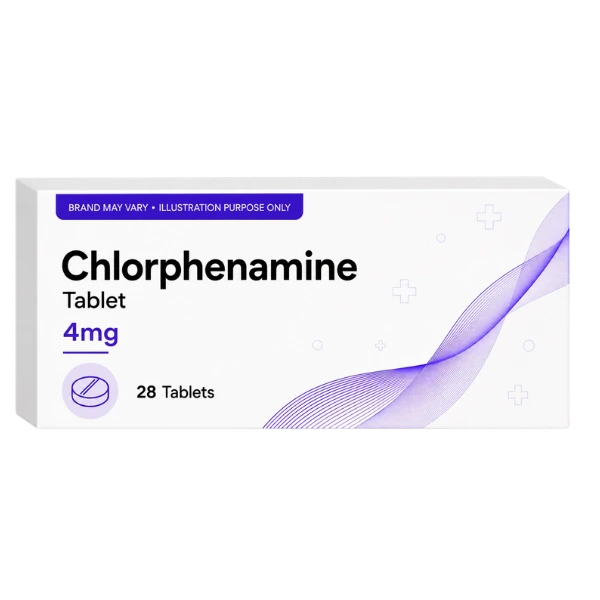
Chlorphenamine Maleate 4mg (28 Tablets)
Sedating antihistamine tablets for short-term allergy symptom relief
- Relieves allergy symptoms such as hayfever, itching, and rashes
- Reduces sneezing, watery eyes, and runny nose
- Provides effective antihistamine relief for mild allergic reactions
- Suitable for adults and children over 6 years old
- Can be taken up to four times daily as directed
£1.09 Available Free Delivery on Orders over £20!
In stock
| Strength | 4mg |
| Size | 28 Tablets |
Relief from Allergy Symptoms and Itching
Chlorphenamine Tablets Overview
Chlorphenamine Tablets are an antihistamine medicine used to relieve symptoms caused by allergic reactions. They contain chlorphenamine maleate, a first-generation antihistamine that helps reduce the effects of histamine in the body.
In the UK, chlorphenamine is an over-the-counter medicine commonly used for the short-term relief of allergy symptoms such as hay fever, urticaria (hives), insect bites, and allergic skin reactions. Because it can cause drowsiness, it is often taken in the evening or at night.
Understanding Allergic Reactions
What causes allergy symptoms?
Allergic symptoms occur when the immune system reacts to substances such as pollen, animal dander, dust mites, foods, or insect venom. This reaction triggers the release of histamine, which causes itching, redness, swelling, sneezing, and watery eyes.
Antihistamines work by blocking the action of histamine, helping to reduce these symptoms.
When sedating antihistamines are useful
Older, sedating antihistamines such as chlorphenamine can be particularly helpful when allergy symptoms interfere with sleep or cause significant itching and discomfort.
What Are Chlorphenamine Tablets?
Chlorphenamine Tablets contain chlorphenamine maleate, which belongs to the class of H1 antihistamines. Unlike newer non-drowsy antihistamines, chlorphenamine crosses the blood–brain barrier, which explains its sedating effect.
This makes it suitable for night-time symptom relief or when drowsiness is not a concern.
How Do Chlorphenamine Tablets Work?
Antihistamine mechanism
Chlorphenamine works by blocking H1 histamine receptors, preventing histamine from exerting its effects on tissues. This helps reduce:
- itching
- redness and swelling
- sneezing
- watery eyes
Sedative effect
Because chlorphenamine acts on the central nervous system, it can cause drowsiness. This may be beneficial at night but can impair alertness during the day.
What Chlorphenamine Treats — and What It Does Not
What it helps with
Chlorphenamine Tablets are used to relieve:
- hay fever and seasonal allergic rhinitis
- allergic skin reactions and hives (urticaria)
- itching due to allergies
- insect bites and stings
- allergic reactions to foods or medicines
What it does not treat
Chlorphenamine does not:
- cure allergies
- treat asthma attacks
- prevent severe allergic reactions (anaphylaxis)
- replace emergency treatment for serious allergy symptoms
Severe reactions require urgent medical care.
Chlorphenamine Tablets Summary
Chlorphenamine Tablets provide effective relief from allergy symptoms and itching by blocking the effects of histamine. Their sedating action makes them particularly useful for night-time symptom control, but care should be taken due to drowsiness.
Persistent or severe allergic symptoms should always be assessed by a healthcare professional.
Active Ingredients
Chlorphenamine Maleate
How to Take Chlorphenamine Tablets
Dosage
Dosage depends on age and the specific product strength. Always follow the instructions on the packaging or those given by a healthcare professional.
Important usage advice
- May cause drowsiness
- Avoid alcohol while taking
- Do not take alongside other antihistamines
- Use the lowest effective dose
Safety, Warnings and Side Effects
Common side effects
Some people may experience:
- drowsiness or sedation
- dry mouth
- dizziness
- blurred vision
These effects are more common with higher doses or in older adults.
Use in older adults
Sedating antihistamines can increase the risk of confusion or falls in older adults and should be used with caution.
When to Seek Medical Advice
Speak to a GP or pharmacist if:
- symptoms persist despite treatment
- allergic reactions are severe or recurrent
- you experience significant side effects
- symptoms suggest a more serious condition
Urgent help is required for swelling of the face, lips, or throat, or difficulty breathing.
Use in Pregnancy and Breastfeeding
Chlorphenamine may be used during pregnancy only on the advice of a healthcare professional. Breastfeeding women should also seek advice before use.
Who Are Chlorphenamine Tablets For?
Chlorphenamine may be suitable for:
- adults and children (age-specific dosing applies)
- people experiencing allergic symptoms or itching
- short-term or occasional use
It is often chosen where drowsiness is acceptable or helpful.
Who Should Avoid Chlorphenamine
Chlorphenamine may not be suitable if:
- you are allergic to chlorphenamine or other antihistamines
- you have glaucoma, prostate enlargement, or urinary retention
- you have epilepsy
- you are taking other sedating medicines
- you need to drive or operate machinery
A pharmacist can advise on suitability.
How Chlorphenamine Compares to Other Antihistamines
Chlorphenamine vs non-drowsy antihistamines
Non-drowsy antihistamines such as loratadine or cetirizine are preferred for daytime use. Chlorphenamine may be chosen for night-time symptoms or severe itching.
Chlorphenamine vs topical treatments
Antihistamine tablets treat symptoms systemically, while creams or lotions act locally. A pharmacist can advise on the best option.
Supporting Allergy Management
Alongside medication, allergy symptoms may be reduced by avoiding known triggers, keeping windows closed during high pollen counts, and maintaining good skin care in allergic rashes.
At Elite Meds, we provide simple, reliable and fast delivery for all orders. We use Royal Mail exclusively, based on consistent performance and strong customer satisfaction across our website and eBay stores.
Delivery Options
Royal Mail Tracked 48 – £3.99
Royal Mail Tracked 24 – £4.49
Delivery timeframes are estimates provided by Royal Mail and are not guaranteed.
Dispatch Times
- Orders placed before 3pm Monday to Friday are dispatched the same working day.
- Orders placed after 3pm, on weekends or bank holidays are dispatched the next working day.
See our full delivery policy here
You May Like These
View All


Reviews (0.0/5 stars based on 0 reviews)
There are no reviews yet.