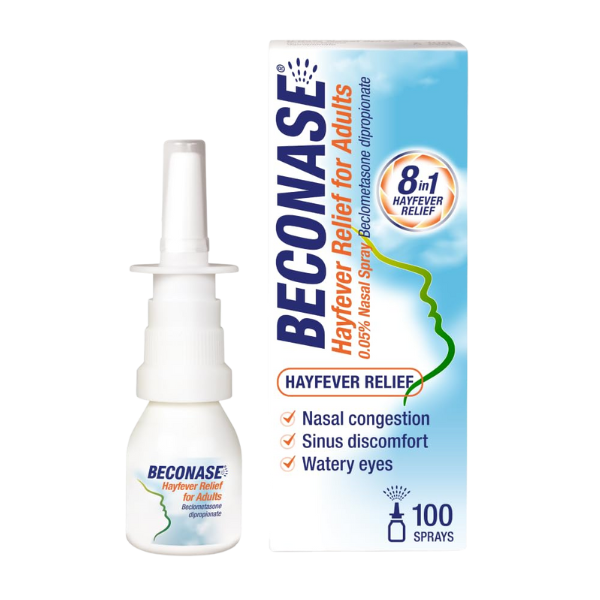
Beconase Hayfever Relief Nasal Spray 8 in 1 (100 Sprays)
Steroid nasal spray for daily hayfever symptom control
- Relieves sneezing, itching, and nasal congestion from hayfever
- Contains beclometasone dipropionate, a corticosteroid
- Reduces inflammation and swelling in nasal passages
- Provides up to 24 hours of effective allergy relief
- Suitable for adults aged 18 and over
£6.69 Available Free Delivery on Orders over £20!
In stock
| Strength | 0.05% |
| Size | 100 Sprays |
Daily Steroid Nasal Spray for Hayfever and Allergic Rhinitis
Beconase Hayfever Relief Nasal Spray Overview
Beconase Hayfever Relief Nasal Spray is a daily corticosteroid nasal spray used to treat the underlying inflammation associated with hayfever (seasonal allergic rhinitis) and perennial allergic rhinitis. It is designed for regular use to reduce symptoms at their source rather than providing short-term masking of discomfort.
In the UK, Beconase is an over-the-counter pharmacy medicine (P) intended for adults who experience persistent nasal allergy symptoms that interfere with daily life.
Understanding Hayfever and Nasal Allergy
Why hayfever causes ongoing symptoms
Hayfever is an allergic response to airborne allergens such as pollen, dust mites, or animal dander. When these allergens are inhaled, the immune system releases inflammatory mediators that cause swelling and irritation of the nasal lining.
This inflammation leads to symptoms such as sneezing, nasal congestion, runny nose, itching, post-nasal drip and sinus pressure. Because inflammation builds up over time, symptoms often persist unless the inflammatory response itself is controlled.
Why treating inflammation matters
Antihistamines block histamine-related symptoms such as sneezing and itching, but they do not fully address nasal inflammation. Steroid nasal sprays like Beconase work upstream by calming the immune response within the nasal passages.
What Is Beconase Hayfever Relief Nasal Spray?
Beconase contains beclometasone dipropionate, a corticosteroid that reduces inflammation in the nasal lining. It is formulated for once-daily use, providing continuous symptom control when used regularly.
Rather than offering instant relief, Beconase is designed to build effectiveness over several days, making it particularly suitable for people with moderate to severe hayfever or year-round nasal allergy symptoms.
How Does Beconase Work?
Anti-inflammatory action
Beclometasone works by suppressing the release of inflammatory substances involved in allergic reactions. This leads to a reduction in:
- nasal swelling
- mucus production
- sensitivity to allergens
As inflammation settles, nasal airflow improves and symptoms become less frequent and less severe.
The “8 in 1” symptom approach
Beconase is marketed as helping relieve eight common nasal allergy symptoms, including congestion, sneezing, runny nose, itching, sinus discomfort and post-nasal drip. This reflects its broad anti-inflammatory effect rather than multiple separate active ingredients.
What Beconase Helps With — and What It Does Not
What it helps with
Beconase is used to manage ongoing symptoms of:
- hayfever
- allergic rhinitis
- nasal congestion caused by allergy
- persistent sneezing and runny nose
It is most effective when used daily throughout the allergy season or during ongoing allergen exposure.
What it does not treat
Beconase does not:
- provide immediate relief like decongestant sprays
- treat colds or flu
- cure allergies permanently
- relieve non-allergic nasal blockage
If symptoms are sudden, severe, or associated with fever or facial pain, medical advice should be sought.
Who Is Beconase For?
Beconase may be suitable for:
- adults aged 18 and over
- people with moderate to severe hayfever
- those whose symptoms are not controlled by antihistamines alone
- individuals with persistent or year-round nasal allergy
It is intended for regular preventive use, not occasional symptom relief.
Who Should Avoid Beconase
Beconase may not be suitable if:
- you are allergic to beclometasone or any ingredient
- you have untreated nasal infections
- you have recently had nasal surgery or injury
- you experience frequent nosebleeds
A pharmacist can help assess suitability before use.
Beconase Hayfever Relief Nasal Spray Summary
Beconase Hayfever Relief Nasal Spray provides effective, preventative control of hayfever and allergic rhinitis symptoms by reducing nasal inflammation at its source. When used consistently, it helps restore nasal comfort and reduces the impact of allergies on daily life.
Persistent or severe symptoms should always be reviewed by a healthcare professional.
Active Ingredients
Beclometasone dipropionate
How to Use Beconase Hayfever Relief Nasal Spray
Beconase is typically used once daily, with one spray into each nostril. It should be used regularly, even when symptoms improve, to maintain control of inflammation.
It may take 2–3 days for symptoms to begin improving, with maximum benefit usually reached after several days of consistent use.
Correct spray technique is important to reduce irritation and nosebleeds.
Safety, Warnings and Side Effects
Beconase is generally well tolerated when used as directed. Some people may experience mild nasal irritation, dryness, sneezing after spraying, or occasional nosebleeds.
Systemic side effects are unlikely at recommended doses because the steroid acts locally in the nasal passages.
If irritation persists or symptoms worsen, use should be reviewed.
When to Seek Medical Advice
Speak to a GP or pharmacist if:
- symptoms do not improve after 7 days of use
- symptoms worsen or change
- you experience frequent nosebleeds
- you suspect a sinus infection
Long-term or severe symptoms may require medical assessment.
Use in Pregnancy and Breastfeeding
Beconase should be used during pregnancy or breastfeeding only on medical advice, as corticosteroid use should be assessed on an individual basis.
How Beconase Compares to Other Hayfever Treatments
Beconase vs antihistamines
Antihistamines act quickly on sneezing and itching, while Beconase targets underlying inflammation. Many people use both together for optimal control.
Beconase vs decongestant sprays
Decongestant sprays provide rapid relief but can cause rebound congestion if used for more than a few days. Beconase is suitable for long-term daily use.
At Elite Meds, we provide simple, reliable and fast delivery for all orders. We use Royal Mail exclusively, based on consistent performance and strong customer satisfaction across our website and eBay stores.
Delivery Options
Royal Mail Tracked 48 – £3.99
Royal Mail Tracked 24 – £4.49
Delivery timeframes are estimates provided by Royal Mail and are not guaranteed.
Dispatch Times
- Orders placed before 3pm Monday to Friday are dispatched the same working day.
- Orders placed after 3pm, on weekends or bank holidays are dispatched the next working day.
See our full delivery policy here
You May Like These
View All


Reviews (0.0/5 stars based on 0 reviews)
There are no reviews yet.