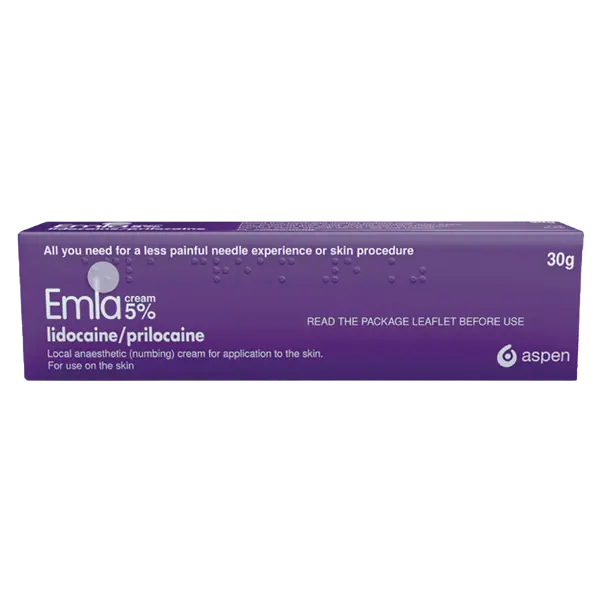
EMLA Cream 5% (30g)
Numbing cream for pain-free skin procedures
- Fast-acting numbing relief
- Reduces pain and discomfort
- Easy-to-apply topical cream
- Suitable for sensitive skin
- Ideal for cosmetic procedures
£16.89 Available Free Delivery on Orders over £20!
In stock
| Strength | 5% |
| Size | 30g |
Topical Local Anaesthetic for Numbing the Skin Before Procedures
EMLA Cream 5% Overview
EMLA Cream 5% is a topical local anaesthetic used to numb the skin before certain medical or cosmetic procedures. It contains a combination of lidocaine and prilocaine, which work together to temporarily block nerve signals in the skin, reducing pain and discomfort.
In the UK, EMLA is a pharmacy medicine (P) commonly used prior to injections, blood tests, cannulation, minor skin procedures and some cosmetic treatments.
Understanding Local Anaesthesia
Why topical anaesthetics are used
Many medical procedures involve needle insertion or superficial skin intervention, which can be uncomfortable or anxiety-provoking. Topical anaesthetics allow the skin to be numbed without injections, making procedures more tolerable.
By acting only at the site of application, topical anaesthetics provide targeted pain relief without affecting the rest of the body.
How numbing creams differ from painkillers
Oral painkillers reduce pain perception centrally, whereas local anaesthetics work by blocking nerve conduction at the skin level, preventing pain signals from reaching the brain in the first place.
What Is EMLA Cream?
EMLA Cream contains:
- Lidocaine
- Prilocaine
Both are amide-type local anaesthetics. When applied under an occlusive dressing, they penetrate the upper layers of the skin to provide effective surface anaesthesia.
The 5% concentration refers to the combined total of the two active ingredients.
How Does EMLA Cream Work?
Nerve signal blockade
Lidocaine and prilocaine block sodium channels in nerve membranes. This prevents nerve impulses from being transmitted, resulting in temporary numbness of the treated area.
Depth and duration of anaesthesia
EMLA provides surface anaesthesia that develops gradually. The depth and duration depend on:
- application time
- thickness of skin
- use of occlusion
Numbness typically lasts long enough for short procedures once the cream is removed.
What EMLA Helps With — and What It Does Not
What it helps with
EMLA Cream is used to numb the skin before:
- injections or vaccinations
- blood tests or cannula insertion
- minor dermatological procedures
- laser or cosmetic treatments
- superficial skin interventions
It is commonly used in both adults and children (age guidance applies).
What it does not treat
EMLA does not:
- provide long-term pain relief
- treat deep pain or inflammation
- work instantly
- replace injectable anaesthesia for major procedures
It is intended for temporary surface numbing only.
EMLA Cream 5% Summary
EMLA Cream 5% (30 g) provides effective, temporary skin numbing using a combination of lidocaine and prilocaine. When applied correctly, it helps reduce pain and anxiety associated with minor medical and cosmetic procedures.
For safe and effective use, EMLA should always be used according to instructions or professional guidance.
Active Ingredients
Lidocaine (2.5%) and Prilocaine (2.5%)
How to Use EMLA Cream
Apply a thick layer of cream to intact skin and cover with an occlusive dressing. The cream is usually left in place for at least 60 minutes before the procedure, depending on the area and purpose.
The cream should be removed completely before the procedure begins.
Safety, Warnings and Side Effects
EMLA is generally well tolerated when used correctly. Temporary skin reactions such as redness, paleness or mild swelling may occur at the application site.
Systemic side effects are rare when used as directed. Do not exceed recommended application time or amount.
When to Seek Medical Advice
Speak to a healthcare professional if:
- numbness lasts longer than expected
- skin irritation is severe or persistent
- the cream is accidentally swallowed
- symptoms of allergic reaction occur
Prompt assessment ensures safe use.
Use in Pregnancy and Breastfeeding
EMLA may be used during pregnancy or breastfeeding only on professional advice, as local anaesthetic exposure should be assessed individually.
Who Is EMLA Cream For?
EMLA Cream may be suitable for:
- adults and children (as per product guidance)
- individuals undergoing minor procedures
- people with needle anxiety
- those requiring short-term local anaesthesia
A pharmacist can advise on appropriate use and suitability.
Who Should Avoid EMLA
EMLA Cream should not be used:
- on broken, inflamed or infected skin
- on mucous membranes unless directed
- in people with known allergy to local anaesthetics of the amide type
- in certain blood disorders such as methaemoglobinaemia, unless advised
Medical advice should be sought if unsure.
How EMLA Compares to Other Anaesthetic Products
EMLA vs lidocaine sprays or gels
Sprays and gels act quickly but provide shallow numbing. EMLA penetrates deeper into the skin, making it more suitable for needle-related procedures.
EMLA vs injectable anaesthetics
Injectable anaesthetics provide deeper and longer-lasting anaesthesia but involve needles. EMLA offers a needle-free alternative for minor procedures.
Reviews (5.0/5 stars based on 1 reviews)
At Elite Meds, we provide simple, reliable and fast delivery for all orders. We use Royal Mail exclusively, based on consistent performance and strong customer satisfaction across our website and eBay stores.
Delivery Options
Royal Mail Tracked 48 – £3.99
Royal Mail Tracked 24 – £4.49
Delivery timeframes are estimates provided by Royal Mail and are not guaranteed.
Dispatch Times
- Orders placed before 3pm Monday to Friday are dispatched the same working day.
- Orders placed after 3pm, on weekends or bank holidays are dispatched the next working day.
See our full delivery policy here
You May Like These
View All


Natalie Brooks ·
Used this before a small procedure and it worked brilliantly. It numbed the area well and made the whole experience much more comfortable.