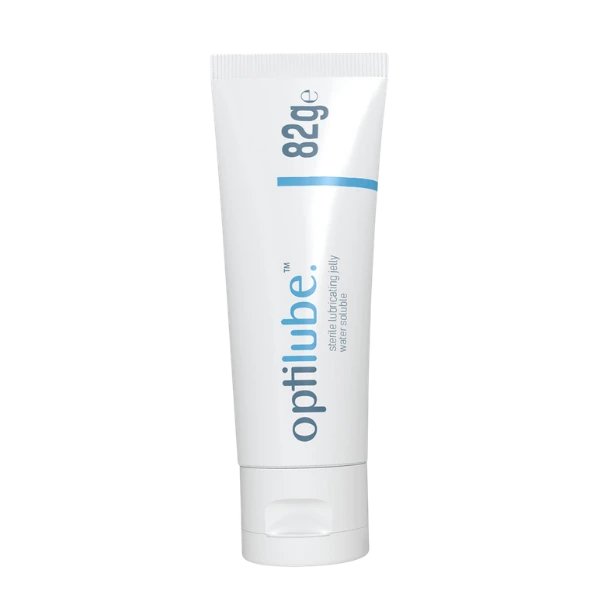
Optilube Sterile Lubricant Jelly (82g)
Sterile, water soluble lubricant for procedures and general use
- Provides smooth, sterile lubrication for medical and personal use
- Water-soluble and non-greasy for easy application and removal
- Reduces friction and discomfort during medical procedures
- Safe to use with latex and silicone materials
- Sterile formulation ensures hygiene and comfort
£2.99 Available Free Delivery on Orders over £20!
In stock
| Size | 82 g |
Overview
How does Optilube Sterile Lubricant Jelly (82g) reduce physical friction?
Optilube Sterile Lubricant Jelly is a Class IIa sterile medical device designed to facilitate the smooth insertion of medical instruments and catheters into body cavities. The formulation relies on a blend of purified water, glycerin, and carbomers. The carbomers act as a thickening agent, giving Optilube Sterile Lubricant Jelly a viscous, gel-like consistency that adheres effectively to gloves, instruments, and mucosal surfaces without running off. When Optilube Sterile Lubricant Jelly is applied, it creates a continuous, slippery film between the medical device and the patient’s skin or mucous membranes. This film significantly reduces the coefficient of friction during movement. By minimising the resistance encountered during insertion, Optilube Sterile Lubricant Jelly prevents the physical abrasion and micro-trauma to the delicate lining of the urethra, vagina, or rectum that can occur with unlubricated contact.
Why is the water-soluble nature of Optilube Sterile Lubricant Jelly (82g) medically important?
Optilube Sterile Lubricant Jelly is formulated to be completely water-soluble. This property is critical for clinical hygiene and patient comfort. Unlike oil-based lubricants (such as petroleum jelly), which can create a barrier that traps bacteria and is difficult to remove, Optilube Sterile Lubricant Jelly dissolves readily in water. This means that after a procedure, Optilube Sterile Lubricant Jelly can be easily rinsed off the skin or instruments without leaving a sticky or greasy residue. Furthermore, because Optilube Sterile Lubricant Jelly is water-based, it is fully compatible with natural human secretions, ensuring it does not interfere with the body’s natural pH balance or cleaning processes.
How does Optilube Sterile Lubricant Jelly (82g) ensure compatibility with medical materials?
A vital characteristic of Optilube Sterile Lubricant Jelly is its chemical inertness regarding synthetic materials. Many medical consumables, such as catheters, examination gloves, and condoms, are made from latex or silicone. Oil-based substances can degrade latex, causing it to weaken, swell, or rupture, which compromises the safety of the procedure or the barrier protection. Optilube Sterile Lubricant Jelly contains no oils or fats. Therefore, Optilube Sterile Lubricant Jelly is safe for use with natural rubber latex, polyurethane, and synthetic materials. This compatibility ensures that Optilube Sterile Lubricant Jelly lubricates effective seals and instruments without damaging the structural integrity of the equipment used.
Active Ingredients
Lidocaine Hydrochloride and Chlorhexidine Gluconate
Usage Instructions
How to apply Optilube Sterile Lubricant Jelly (82g) correctly?
Optilube Sterile Lubricant Jelly is for external and internal use.
- Hygiene: Wash hands thoroughly before opening Optilube Sterile Lubricant Jelly.
- Opening: Unscrew the cap of Optilube Sterile Lubricant Jelly. Pierce the seal of the tube using the spike found in the reverse side of the cap.
- Application (Instruments): Squeeze a generous amount of Optilube Sterile Lubricant Jelly onto the instrument (e.g., thermometer, catheter, speculum) immediately prior to insertion. Ensure the insertion tip is fully coated.
- Application (Personal Use): Squeeze the desired amount of Optilube Sterile Lubricant Jelly onto fingers or directly onto the area requiring lubrication.
- Aftercare: After the procedure, wipe away any excess Optilube Sterile Lubricant Jelly with a tissue or rinse with warm water.
- Closure: Recap the tube tightly immediately after use to maintain the quality of the remaining Optilube Sterile Lubricant Jelly.
How long does Optilube Sterile Lubricant Jelly (82g) remain sterile?
The contents of Optilube Sterile Lubricant Jelly are sterile until the tube is opened. Once the seal is broken, Optilube Sterile Lubricant Jelly is no longer considered sterile, although the preservatives inhibit bacterial growth. For strict sterile procedures (like catheterisation in a hospital setting), a new, single-use sachet is often preferred over a multi-use tube like Optilube Sterile Lubricant Jelly (82g), which is better suited for repeat use on the same patient or general examinations. Use within 3 months of opening is generally recommended.
Warnings
When must Optilube Sterile Lubricant Jelly (82g) not be used?
Optilube Sterile Lubricant Jelly must not be used by patients with a known allergy or hypersensitivity to alkyl 4-hydroxybenzoates (parabens) or any of the other ingredients. Optilube Sterile Lubricant Jelly must not be used in contact with the eyes; if contact occurs, rinse thoroughly with water. Optilube Sterile Lubricant Jelly must not be used on broken skin or deep, open wounds unless directed by a healthcare professional.
Does Optilube Sterile Lubricant Jelly (82g) affect fertility?
Optilube Sterile Lubricant Jelly is not a contraceptive and does not contain spermicide. However, standard water-based lubricants like Optilube Sterile Lubricant Jelly can impede the motility (swimming speed) of sperm. Therefore, Optilube Sterile Lubricant Jelly is not recommended for couples who are actively trying to conceive. In these cases, a fertility-specific lubricant should be used.
Who Is It For
Who is Optilube Sterile Lubricant Jelly (82g) suitable for?
Optilube Sterile Lubricant Jelly is suitable for patients of all ages, including infants, children, adults, and the elderly. Optilube Sterile Lubricant Jelly is specifically indicated for individuals undergoing general medical examinations, such as vaginal or rectal exams, where lubrication is required to reduce discomfort. Optilube Sterile Lubricant Jelly is an ideal choice for patients who self-catheterise, as it assists the smooth passage of the catheter tube. Optilube Sterile Lubricant Jelly is also suitable for use during sexual intercourse to relieve vaginal dryness, as it mimics natural moisture and is safe to use with condoms.
Alternatives
Common alternatives to Optilube Sterile Lubricant Jelly (82g)?
If Optilube Sterile Lubricant Jelly is not suitable due to the lack of anaesthetic or specific application needs, common alternatives include:
- KY Jelly: A widely recognised consumer lubricant that is very similar in formulation to Optilube Sterile Lubricant Jelly, used primarily for personal lubrication.
- Aquagel Lubricating Jelly: A medical-grade universal lubricant often used in hospitals, offering an identical sterile, water-soluble profile to Optilube Sterile Lubricant Jelly.
- Instillagel: Contains lidocaine (a local anaesthetic) and chlorhexidine (an antiseptic), suitable for painful procedures like catheterisation where numbing is required, unlike the plain lubrication of Optilube Sterile Lubricant Jelly.
- Conceive Plus Fertility Lubricant: Specifically formulated to be sperm-friendly with calcium and magnesium ions, suitable for couples trying to conceive where Optilube Sterile Lubricant Jelly might hinder sperm motility.
- Sylk: A natural plant-based lubricant made from kiwi fruit vine extract, suitable for patients who are sensitive to the synthetic chemicals found in Optilube Sterile Lubricant Jelly.
At Elite Meds, we provide simple, reliable and fast delivery for all orders. We use Royal Mail exclusively, based on consistent performance and strong customer satisfaction across our website and eBay stores.
Delivery Options
Royal Mail Tracked 48 – £3.99
Royal Mail Tracked 24 – £4.49
Delivery timeframes are estimates provided by Royal Mail and are not guaranteed.
Dispatch Times
- Orders placed before 3pm Monday to Friday are dispatched the same working day.
- Orders placed after 3pm, on weekends or bank holidays are dispatched the next working day.
See our full delivery policy here
You May Like These
View All


Reviews (0.0/5 stars based on 0 reviews)
There are no reviews yet.