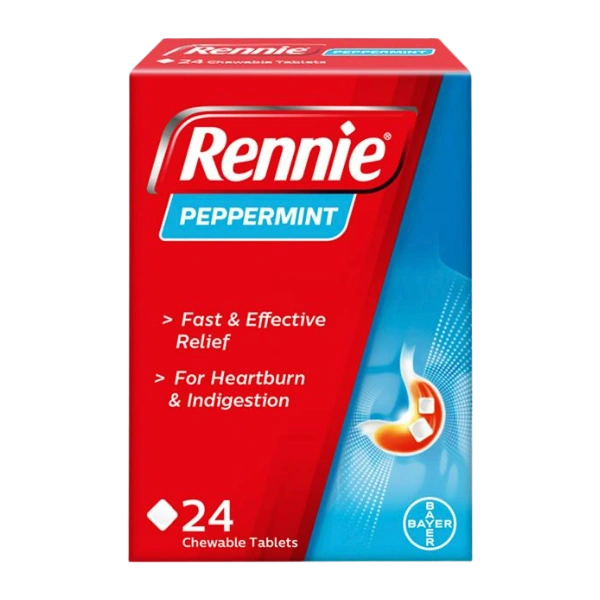
Rennie Tablets
Fast and effective relief from heartburn, indigestion, and acid reflux discomfort.
- Neutralises excess stomach acid quickly
- Contains calcium carbonate and magnesium carbonate
- Provides soothing relief from acid-related pain
- Suitable for use during pregnancy (as advised by a doctor)
- Chewable tablets with a pleasant mint flavour
| Active Ingredient | — |
| Strength | — |
| Size | — |
| Flavour | — |
Overview
How do Rennie Tablets relieve heartburn and indigestion?
Rennie Tablets are a fast-acting antacid treatment designed to neutralise the excess stomach acid that causes heartburn and indigestion (dyspepsia). The formula relies on two naturally occurring antacids: calcium carbonate and magnesium carbonate. When the tablet is chewed, these active ingredients are released and travel down the oesophagus into the stomach. Once there, they undergo a direct chemical reaction with the hydrochloric acid in the gastric juices. This reaction converts the harsh, burning acid into water and other neutral substances. By rapidly lowering the acidity of the stomach contents, Rennie effectively eliminates the burning sensation in the chest and the discomfort of a bloated, unsettled stomach.
Why do Rennie Tablets use two different antacids?
The combination of calcium carbonate and magnesium carbonate is not accidental; it is designed to balance the body’s reaction to the medication. Calcium carbonate is a potent and rapid neutraliser, but used alone in high doses, it can sometimes cause constipation. Magnesium carbonate is also an effective antacid, but it tends to have a mild laxative effect. By combining the two in specific ratios, Rennie Tablets provide powerful acid neutralisation while minimising the risk of bowel side effects, ensuring the digestive system remains regular during treatment.
What specific symptoms does Rennie Tablets treat?
Rennie is primarily indicated for the relief of hyperacidity. This encompasses the burning pain of heartburn thats is often felt behind the breastbone, acid reflux, where acid rises into the throat, and the bloated, heavy feeling of indigestion often caused by eating too quickly or consuming rich, spicy, or fatty foods. Because the tablets work locally in the stomach rather than entering the bloodstream, they are also effective for relieving the “trapped wind” and flatulence that can accompany these digestive issues.
Active ingredients
Calcium Carbonate, Magnesium Carbonate
Usage Instructions
How to take Rennie Tablets?
The usual dosage for adults is one or two tablets chewed or sucked as soon as symptoms appear. The tablets are designed to dissolve in the mouth, which starts the release of the active ingredients before they even reach the stomach. You can take the tablets up to a maximum of ten times a day (a total of 10 tablets) if needed, but they should generally be taken one hour after meals and before bedtime. Do not swallow the tablets whole, as they need to be broken down by chewing to work effectively. Prolonged use should be avoided; if symptoms persist after 14 days, you should consult a doctor.
Warnings
Safety precautions and potential interactions
Although Rennie Tablets are available without a prescription, they contain significant amounts of calcium. Therefore, they should not be used by individuals with severe kidney problems, kidney stones, or high levels of calcium in their blood (hypercalcaemia). Long-term use of high doses can lead to a condition called milk-alkali syndrome, which can impact kidney function. If you are taking antibiotics, especially tetracyclines or quinolones or iron supplements, you should leave a gap of at least two hours between taking them and taking Rennie, as the antacids can prevent these other medicines from being absorbed by the body.
Who Is It For
Who are Rennie Tablets suitable for?
These tablets are suitable for adults and children aged 12 years and over. They are a widely trusted choice for women during pregnancy and breastfeeding, as the ingredients are not absorbed significantly into the bloodstream and are generally considered safe for the baby when taken within the recommended limits. They are also ideal for individuals who want a portable, convenient solution for “on-the-go” relief after meals, as the tablets do not require water to take. Rennie is suitable for vegetarians and those who prefer a sugar-free option if the specific sugar-free variant is chosen.
Alternatives
Common alternatives to Rennie Tablets
If Rennie does not provide sufficient relief or if you prefer a different mechanism of action, other options include:
- Gaviscon Advance: A liquid or tablet that forms a physical “raft” on top of the stomach contents to physically block acid from rising.
- Bisodol Indigestion Relief: A soluble powder or tablet containing three antacids (sodium bicarbonate, calcium carbonate, magnesium carbonate) for rapid neutralisation.
- Nexium Control (Esomeprazole): A proton pump inhibitor (PPI) that reduces the actual production of acid for 24-hour protection, rather than just neutralising it.
- Pepto-Bismol: A liquid suspension containing bismuth subsalicylate, used for treating heartburn along with nausea and diarrhoea.
At Elite Meds, we provide simple, reliable and fast delivery for all orders. We use Royal Mail exclusively, based on consistent performance and strong customer satisfaction across our website and eBay stores.
Delivery Options
Royal Mail Tracked 48 – £3.99
Royal Mail Tracked 24 – £4.49
Delivery timeframes are estimates provided by Royal Mail and are not guaranteed.
Dispatch Times
- Orders placed before 3pm Monday to Friday are dispatched the same working day.
- Orders placed after 3pm, on weekends or bank holidays are dispatched the next working day.
See our full delivery policy here
You May Like These
View All


Reviews (0.0/5 stars based on 0 reviews)
There are no reviews yet.