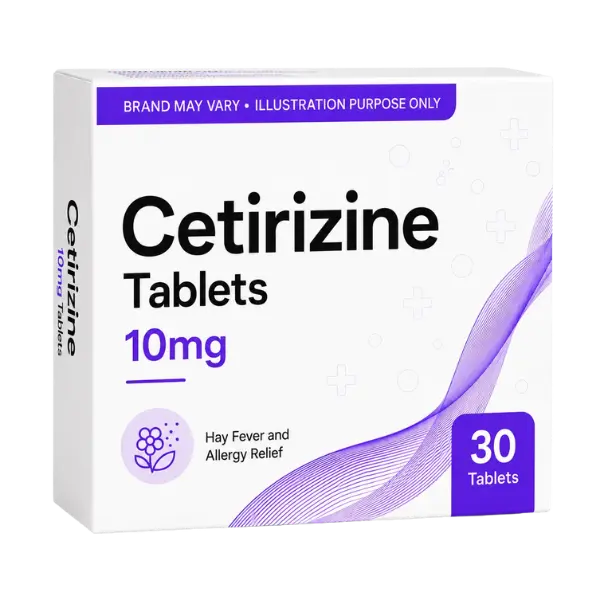
Cetirizine Tablets (30 Tablets)
Anti-allergy medicine designed to provide allergy relief
- Provides relief to those suffering from hay fever and allergies
- Contains cetirizine hydrochloride
- Works within an hour
- Easy to swallow
- Combats allergy symptoms
£0.79 Available Free Delivery on Orders over £20!
In stock
| Strength | 10mg |
| Size | 30 Tablets |
Fast-Acting, Non-Drowsy Relief from Allergy Symptoms
Cetirizine Tablets Overview
Cetirizine Tablets are an antihistamine medicine used to relieve symptoms of allergic conditions, including hay fever and other allergic reactions. They contain cetirizine hydrochloride, which works by blocking the effects of histamine — a chemical released by the body during an allergic response.
In the UK, cetirizine is an over-the-counter pharmacy medicine, widely used for both seasonal and year-round allergies.
Understanding Allergies
What causes allergy symptoms
Allergic symptoms occur when the immune system overreacts to substances such as pollen, dust mites, animal dander or mould. This triggers the release of histamine, leading to symptoms such as sneezing, itching, runny nose, watery eyes and skin reactions.
These symptoms can significantly affect sleep, concentration and daily comfort if left untreated.
Why antihistamines help
Antihistamines reduce allergy symptoms by blocking histamine receptors, preventing histamine from exerting its effects on the body’s tissues.
What Are Cetirizine Tablets?
Cetirizine Tablets contain cetirizine hydrochloride, a second-generation antihistamine. Compared with older antihistamines, cetirizine is less likely to cause drowsiness, making it suitable for daytime use in many people.
The tablet form provides convenient, once-daily dosing.
How Does Cetirizine Work?
Histamine receptor blockade
Cetirizine selectively blocks H1 histamine receptors, preventing histamine from triggering allergic symptoms such as itching, swelling and excessive mucus production.
Rapid and sustained action
Cetirizine typically begins working within 30–60 minutes and provides symptom relief for up to 24 hours, supporting all-day allergy control.
What Cetirizine Helps With — and What It Does Not
What it helps with
Cetirizine Tablets are used to relieve:
- hay fever (seasonal allergic rhinitis)
- year-round allergic rhinitis
- sneezing and runny nose
- itchy, watery eyes
- allergic skin reactions such as hives (urticaria)
It is suitable for both short-term and longer-term allergy management.
What it does not treat
Cetirizine does not:
- cure allergies permanently
- relieve nasal congestion on its own
- treat asthma symptoms
- replace avoidance of known allergens
Additional treatments may be needed for congestion or severe symptoms.
Cetirizine Tablets Summary
Cetirizine Tablets (30 Tablets) provide effective, long-lasting relief from allergy symptoms such as sneezing, itching and watery eyes. With once-daily dosing and a low risk of drowsiness, they are a convenient option for managing hay fever and other allergic conditions.
Persistent or severe allergy symptoms should always be assessed by a healthcare professional.
Active Ingredients
Cetirizine, Loratadine
How to Take Cetirizine Tablets
Cetirizine is usually taken once daily, swallowed with water. It can be taken with or without food.
Do not exceed the recommended dose.
Safety, Warnings and Side Effects
Cetirizine is generally well tolerated. Some people may experience mild drowsiness, headache or dry mouth, although this is less common than with older antihistamines.
Alcohol may increase drowsiness and should be limited.
When to Seek Medical Advice
Speak to a GP or pharmacist if:
- symptoms persist despite treatment
- allergy symptoms worsen
- you experience unusual side effects
- you need daily treatment for extended periods
Further assessment may be required.
Use in Pregnancy and Breastfeeding
Cetirizine may be used during pregnancy or breastfeeding on professional advice, as antihistamine use should be assessed individually.
Who Are Cetirizine Tablets For?
Cetirizine Tablets may be suitable for:
- adults and children over the recommended age
- people with hay fever or allergic rhinitis
- individuals needing non-drowsy allergy relief
A pharmacist can advise on appropriate dosing and suitability.
Who Should Avoid Cetirizine
Cetirizine should not be used if:
- you are allergic to cetirizine or related antihistamines
- you have severe kidney impairment without advice
Caution is advised if taking other sedating medicines.
How Cetirizine Compares to Other Antihistamines
Cetirizine vs loratadine
Both are non-drowsy antihistamines. Cetirizine may be slightly more effective for skin-related symptoms, while loratadine is often preferred if drowsiness is a concern.
Cetirizine vs older antihistamines
Older antihistamines can cause significant sedation. Cetirizine provides effective symptom relief with a lower risk of drowsiness.
At Elite Meds, we provide simple, reliable and fast delivery for all orders. We use Royal Mail exclusively, based on consistent performance and strong customer satisfaction across our website and eBay stores.
Delivery Options
Royal Mail Tracked 48 – £3.99
Royal Mail Tracked 24 – £4.49
Delivery timeframes are estimates provided by Royal Mail and are not guaranteed.
Dispatch Times
- Orders placed before 3pm Monday to Friday are dispatched the same working day.
- Orders placed after 3pm, on weekends or bank holidays are dispatched the next working day.
See our full delivery policy here


Reviews (0.0/5 stars based on 0 reviews)
There are no reviews yet.