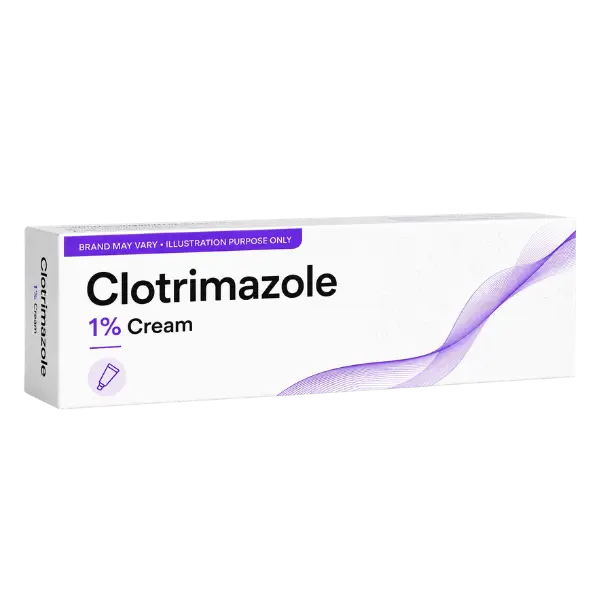
Clotrimazole 1% Cream
A multifaceted treatment for fungal infections
- Treats fungal infections
- Treats nappy rash
- Relieves irritation and itching
- Easy to apply
- Fast-acting treatment
| Active Ingredient | — |
| Strength | — |
| Size | — |
| Flavour | — |
Antifungal Treatment for Common Fungal Skin Infections
Clotrimazole 1% Cream Overview
Clotrimazole 1% Cream is a topical antifungal medicine used to treat a range of fungal skin infections. It works by killing the fungi responsible for infection and relieving associated symptoms such as itching, redness and soreness.
In the UK, clotrimazole 1% cream is an over-the-counter pharmacy medicine, widely used as a first-line treatment for uncomplicated fungal infections of the skin.
Understanding Fungal Skin Infections
What causes fungal infections
Fungal skin infections are caused by dermatophytes or yeasts that thrive in warm, moist environments. Common areas affected include the feet, groin, skin folds and areas prone to sweating.
Infection can lead to itching, redness, scaling, cracking and discomfort, and may spread if left untreated.
Why early treatment matters
Treating fungal infections early helps relieve symptoms more quickly and reduces the risk of spread to other areas of the body or to other people.
What Is Clotrimazole 1% Cream?
Clotrimazole is a broad-spectrum antifungal agent effective against many of the fungi that commonly infect human skin. The 1% cream formulation allows direct application to the affected area, delivering treatment exactly where it is needed.
It is suitable for use on intact skin and is commonly recommended by pharmacists for initial treatment.
How Does Clotrimazole Work?
Antifungal action
Clotrimazole works by interfering with ergosterol synthesis, an essential component of fungal cell membranes. Without ergosterol, the fungal cells become damaged and unable to survive, allowing the infection to clear.
Gradual symptom relief
As the fungus is eliminated, inflammation and irritation reduce, leading to relief from itching, redness and discomfort over time.
What Clotrimazole Helps With — and What It Does Not
What it helps with
Clotrimazole 1% Cream is used to treat:
- athlete’s foot (tinea pedis)
- fungal groin infection (tinea cruris)
- fungal skin infections on the body (tinea corporis)
- fungal infections in skin folds
- yeast-related skin infections
It is effective when used regularly for the full recommended course.
What it does not treat
Clotrimazole does not:
- treat bacterial or viral skin infections
- provide instant relief
- treat nail fungal infections
- replace medical assessment for severe or recurrent infections
Persistent symptoms should be reviewed.
Clotrimazole 1% Cream Summary
Clotrimazole 1% Cream provides effective treatment for common fungal skin infections by targeting and eliminating the fungi responsible for infection. When used consistently and for the full course, it helps relieve symptoms and supports complete clearance.
Persistent or recurrent fungal infections should always be assessed by a healthcare professional.
Active Ingredients
Clotrimazole
How to Use Clotrimazole 1% Cream
Apply a thin layer to clean, dry skin two to three times daily, covering the affected area and a small margin of surrounding skin. Treatment should be continued for the full recommended duration, even if symptoms improve earlier.
Maintaining a clean, dry environment improves treatment success.
Safety, Warnings and Side Effects
Clotrimazole is generally well tolerated. Mild irritation, redness or stinging may occur, particularly at the start of treatment. If severe irritation develops, discontinue use and seek advice.
Avoid contact with eyes and mucous membranes.
When to Seek Medical Advice
Speak to a GP or pharmacist if:
- symptoms do not improve within 2–4 weeks
- the infection worsens or spreads
- the skin becomes painful, swollen or oozing
- infections recur frequently
Further investigation or alternative treatment may be required.
Use in Pregnancy and Breastfeeding
Topical clotrimazole is commonly used during pregnancy and breastfeeding, but it should be used on professional advice, particularly for prolonged treatment.
Who Is Clotrimazole 1% Cream For?
Clotrimazole may be suitable for:
- adults and children (check age guidance on packaging)
- people with mild to moderate fungal skin infections
- individuals seeking non-prescription antifungal treatment
A pharmacist can help confirm suitability based on symptoms.
Who Should Avoid Clotrimazole
Do not use clotrimazole cream:
- if you are allergic to clotrimazole or any ingredients
- on broken, severely inflamed or infected skin unless advised
- on the scalp or nails unless directed by a healthcare professional
If the diagnosis is uncertain, medical advice should be sought.
How Clotrimazole Compares to Other Antifungals
Clotrimazole vs terbinafine
Terbinafine may act faster for some infections, while clotrimazole remains a widely used first-line option due to its broad antifungal activity and safety profile.
Clotrimazole vs combination creams
Clotrimazole alone treats fungal infection without steroid exposure. Combination creams are reserved for short-term use when inflammation is severe.
At Elite Meds, we provide simple, reliable and fast delivery for all orders. We use Royal Mail exclusively, based on consistent performance and strong customer satisfaction across our website and eBay stores.
Delivery Options
Royal Mail Tracked 48 – £3.99
Royal Mail Tracked 24 – £4.49
Delivery timeframes are estimates provided by Royal Mail and are not guaranteed.
Dispatch Times
- Orders placed before 3pm Monday to Friday are dispatched the same working day.
- Orders placed after 3pm, on weekends or bank holidays are dispatched the next working day.
See our full delivery policy here

Reviews (0.0/5 stars based on 0 reviews)
There are no reviews yet.