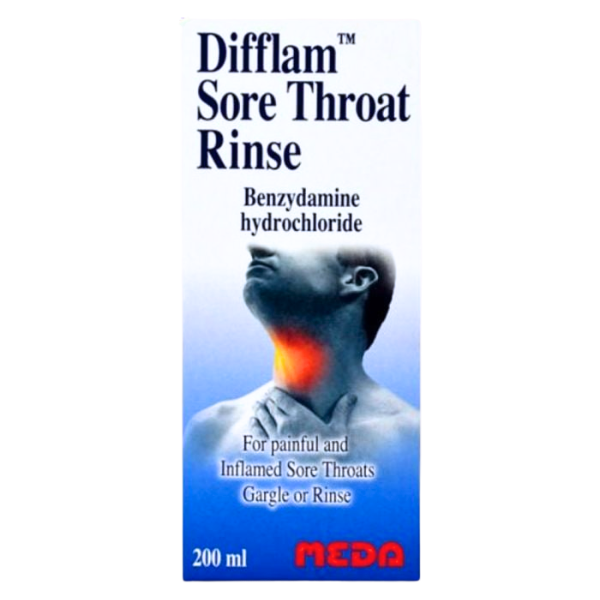
Difflam Sore Throat Rinse (200ml)
Anti-inflammatory mouth rinse to soothe painful, inflamed throats
- Soothes pain and inflammation of the throat and mouth
- Contains benzydamine hydrochloride with anti-inflammatory benefits
- Ideal for oral irritation, ulcers, and post-dental discomfort
- Alcohol-free formula suitable for frequent use
- Provides cooling, soothing relief within minutes
£8.29 Available Free Delivery on Orders over £20!
In stock
| Strength | 0.15% w/v |
| Size | 200 ml |
Overview
How does Difflam Sore Throat Rinse (200ml) biologically suppress inflammation?
Difflam Sore Throat Rinse contains the active pharmaceutical ingredient benzydamine hydrochloride. This compound is a non-steroidal anti-inflammatory drug (NSAID) that possesses a unique mechanism of action compared to systemic painkillers like ibuprofen. When Difflam Sore Throat Rinse is gargled, the benzydamine molecules come into direct contact with the inflamed mucosal lining of the oropharynx (mouth and throat).
Biologically, Difflam Sore Throat Rinse works by stabilising the cell membranes of the damaged tissues. This stabilisation inhibits the release of pro-inflammatory mediators, specifically cytokines and prostaglandins, which are the chemical signals responsible for triggering the inflammatory response. By blocking the synthesis and release of these chemicals at the source of the infection or trauma, Difflam Sore Throat Rinse effectively reduces the vasodilation (widening of blood vessels) that causes redness and the vascular permeability that causes swelling (oedema).
What is the local anaesthetic effect of Difflam Sore Throat Rinse (200ml)?
In addition to its anti-inflammatory properties, Difflam Sore Throat Rinse acts as a local anaesthetic. Benzydamine is structurally similar to local anaesthetic molecules, allowing Difflam Sore Throat Rinse to reversibly block the sodium channels on the sensory nerve endings in the throat. By preventing the influx of sodium ions into the nerve cells, Difflam Sore Throat Rinse inhibits the generation of action potentials—the electrical impulses that transmit pain signals to the brain. This results in a rapid numbing sensation that provides immediate relief from the sharp pain associated with swallowing (dysphagia), allowing the patient to eat and drink more comfortably while the anti-inflammatory action works to heal the tissue.
Why is the liquid formulation of Difflam Sore Throat Rinse (200ml) medically advantageous for oral lesions?
The gargle formulation of Difflam Sore Throat Rinse ensures comprehensive coverage of the oral cavity. Unlike sprays that target a specific focal point or lozenges that dissolve slowly in one area, the liquid action of Difflam Sore Throat Rinse bathes the entire surface of the mouth and throat. This is particularly medically advantageous for treating widespread conditions such as mucositis (inflammation of the mucous membranes often caused by radiation therapy) or multiple aphthous ulcers. Difflam Sore Throat Rinse can penetrate the crypts of the tonsils and the spaces between the teeth and gums, ensuring that the active ingredient reaches difficult-to-access areas where bacteria or inflammation may be harbouring.
What specific conditions does Difflam Sore Throat Rinse (200ml) treat?
Difflam Sore Throat Rinse is clinically indicated for the symptomatic relief of painful inflammatory conditions of the mouth and throat. This includes pharyngitis (sore throat), tonsillitis, and post-operative soreness following tonsillectomy or dental surgery. Difflam Sore Throat Rinse is also highly effective for managing the pain of oral ulceration and conditions caused by the use of orthodontic devices or ill-fitting dentures. By reducing swelling, Difflam Sore Throat Rinse helps to restore normal swallowing function and prevents the dehydration that can occur when swallowing is too painful.
Active Ingredients
Benzydamine Hydrochloride
Usage Instructions
How to administer Difflam Sore Throat Rinse (200ml) correctly?
Difflam Sore Throat Rinse is for use as a gargle or mouthwash only and must not be swallowed.
- Measurement: Pour 15ml of Difflam Sore Throat Rinse into the measuring cup provided.
- Application (Throat): If the pain is in the throat, gargle the liquid for 20 to 30 seconds to ensure it coats the back of the throat thoroughly.
- Application (Mouth): If the pain is in the mouth (e.g., ulcers), rinse the liquid around the mouth for 20 to 30 seconds.
- Completion: Spit the solution out. Do not swallow Difflam Sore Throat Rinse.
- Frequency: The process should be repeated every 1.5 to 3 hours as required for pain relief.
Can Difflam Sore Throat Rinse (200ml) be diluted?
Yes, if the user experiences a stinging sensation upon using Difflam Sore Throat Rinse undiluted, which can happen if the tissues are raw or ulcerated, Difflam Sore Throat Rinse can be diluted with water. The user should mix 15ml of Difflam Sore Throat Rinse with 15ml of water in the measuring cup before gargling.
Warnings
When must Difflam Sore Throat Rinse (200ml) not be used?
Difflam Sore Throat Rinse must not be used by children under 12 years of age. Difflam Sore Throat Rinse must not be used by patients with a known hypersensitivity to benzydamine hydrochloride. Difflam Sore Throat Rinse contains a small amount of ethanol (alcohol); therefore, it may not be suitable for patients with liver disease, alcoholism, or epilepsy, and parents should be aware of this content. Difflam Sore Throat Rinse should not be used during pregnancy or breastfeeding unless a doctor considers it essential, as safety in these groups has not been definitively established. Users should avoid contact with the eyes; if Difflam Sore Throat Rinse enters the eyes, they should be washed immediately with cold water.
What are the potential side effects of Difflam Sore Throat Rinse (200ml)?
The most common side effect is oral numbness or a “stinging” sensation. While the numbness is part of the therapeutic effect, intense stinging may require dilution. In very rare cases, Difflam Sore Throat Rinse may cause photosensitivity (skin sensitivity to sunlight) or an allergic rash.
Who Is It For
Who is Difflam Sore Throat Rinse (200ml) suitable for?
Difflam Sore Throat Rinse is suitable for adults and children aged 12 years and over. Difflam Sore Throat Rinse is specifically designed for individuals suffering from moderate to severe throat pain who require stronger relief than simple antiseptic lozenges can provide. Difflam Sore Throat Rinse is an ideal choice for patients recovering from oral surgery who cannot chew solids or open their mouths wide enough for sprays. Difflam Sore Throat Rinse is suitable for use by the elderly, provided they do not have difficulty with the physical act of gargling and spitting.
Alternatives
Common alternatives to Difflam Sore Throat Rinse (200ml)?
If Difflam Sore Throat Rinse is not suitable due to the alcohol content or the gargling method, common alternatives include:
- Difflam Spray: Contains the same active ingredient (benzydamine) but in a spray format, which is easier for some patients to target directly at the back of the throat without gargling.
- Corsodyl Mouthwash: Contains chlorhexidine, which is a powerful antiseptic for treating gum disease and infections, but it lacks the direct pain-numbing local anaesthetic effect of Difflam Sore Throat Rinse.
- Ultra Chloraseptic Anaesthetic Throat Spray: Contains benzocaine to numb the throat rapidly, but does not provide the anti-inflammatory action to reduce swelling like Difflam Sore Throat Rinse.
- Soluble Aspirin Gargle: Gargling with dissolved aspirin can provide anti-inflammatory relief, but this must not be used by children under 16 due to the risk of Reye’s Syndrome.
- Tyrozets Lozenges: Contains an antibiotic and an anaesthetic in a solid lozenge form, suitable for those who prefer sucking a lozenge to using a liquid rinse like Difflam Sore Throat Rinse.
At Elite Meds, we provide simple, reliable and fast delivery for all orders. We use Royal Mail exclusively, based on consistent performance and strong customer satisfaction across our website and eBay stores.
Delivery Options
Royal Mail Tracked 48 – £3.99
Royal Mail Tracked 24 – £4.49
Delivery timeframes are estimates provided by Royal Mail and are not guaranteed.
Dispatch Times
- Orders placed before 3pm Monday to Friday are dispatched the same working day.
- Orders placed after 3pm, on weekends or bank holidays are dispatched the next working day.
See our full delivery policy here
You May Like These
View All


Reviews (0.0/5 stars based on 0 reviews)
There are no reviews yet.