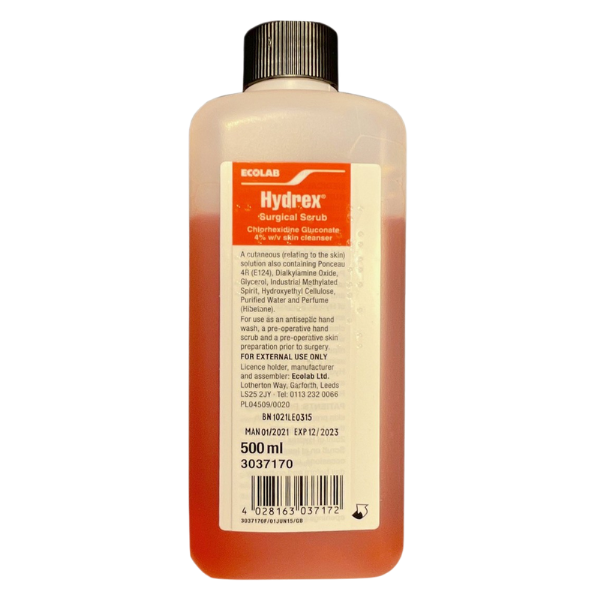
Hydrex Surgical Scrub (500ml)
Antiseptic skin cleanser for hygienic hand and skin preparation
- Antiseptic skin cleanser for pre-operative or general use
- Contains chlorhexidine gluconate for effective disinfection
- Helps reduce harmful bacteria on the skin surface
- Gentle on the hands and suitable for frequent washing
- Used in medical and clinical hygiene routines
£8.29 Available Free Delivery on Orders over £20!
In stock
| Size | 500 ml |
Antiseptic Skin Cleanser for Pre-Operative and Clinical Use
Hydrex Surgical Scrub Overview
Hydrex Surgical Scrub is a chlorhexidine-based antiseptic skin cleanser used to reduce skin bacteria prior to surgical procedures and during clinical hand and body washing. It is formulated to provide effective antimicrobial cleansing while being suitable for repeated professional use.
In the UK, Hydrex is used in hospital, clinic and community healthcare settings, as well as in situations where rigorous skin decontamination is required under professional guidance.
Understanding Antiseptic Skin Cleansing
Why skin decontamination matters
The skin naturally carries bacteria that are usually harmless, but during surgery or invasive procedures these microorganisms can cause infection if they enter the body. Pre-operative skin cleansing significantly reduces microbial load and lowers the risk of surgical site infection.
Effective antiseptic scrubs are therefore a core part of infection prevention protocols in healthcare.
The role of chlorhexidine
Chlorhexidine is widely used in medical settings due to its broad-spectrum antimicrobial activity and its ability to continue working on the skin after application.
What Is Hydrex Surgical Scrub?
Hydrex Surgical Scrub contains chlorhexidine gluconate, an antiseptic agent effective against a wide range of bacteria. It is supplied as a liquid scrub designed for use on the skin and hands prior to procedures or during clinical cleansing routines.
The formulation is suitable for repeated use and is designed to cleanse without excessive drying when used as directed.
How Does Hydrex Work?
Antimicrobial action
Chlorhexidine works by disrupting bacterial cell membranes, leading to cell death. It is effective against many Gram-positive and Gram-negative bacteria, helping reduce skin colonisation.
Residual activity
Unlike simple soap, chlorhexidine continues to suppress bacterial growth after rinsing, providing ongoing antimicrobial protection.
What Hydrex Helps With — and What It Does Not
What it helps with
Hydrex Surgical Scrub is used for:
- pre-operative skin preparation
- surgical hand scrubbing
- clinical skin cleansing
- reducing skin bacterial load
- infection control protocols
It is intended for use where high levels of skin hygiene are required.
What it does not treat
Hydrex does not:
- treat established skin infections
- replace antibiotic treatment
- treat fungal or viral skin conditions
- function as a general cosmetic cleanser
Its role is preventative rather than therapeutic.
Hydrex Surgical Scrub Summary
Hydrex Surgical Scrub (500 ml) provides effective antiseptic skin cleansing for clinical and surgical use, helping reduce skin bacteria and support infection prevention. When used as part of established protocols, it plays an important role in maintaining high standards of hygiene in healthcare settings.
Use should always follow professional guidance and established infection control procedures.
Active Ingredients
Chlorhexidine gluconate
How to Use Hydrex Surgical Scrub
Hydrex is applied to wet skin, lathered thoroughly, then rinsed off with water. Application technique and duration depend on clinical protocols and intended use.
Hands and skin should be dried with clean towels after use.
Safety, Warnings and Side Effects
Hydrex is generally well tolerated when used correctly. Possible side effects include mild skin irritation or dryness with frequent use. Rarely, allergic reactions to chlorhexidine may occur.
If signs of hypersensitivity develop, discontinue use immediately and seek medical advice.
When to Seek Medical Advice
Seek professional guidance if:
- skin irritation becomes severe or persistent
- signs of allergic reaction occur
- accidental contact with eyes or ears happens
Appropriate management should be initiated promptly.
Use in Pregnancy and Breastfeeding
Hydrex may be used in pregnancy and breastfeeding under professional guidance, as it acts locally on the skin and is not systemically absorbed to a significant degree.
Who Is Hydrex Surgical Scrub For?
Hydrex is intended for:
- healthcare professionals
- clinical and surgical environments
- supervised use where antiseptic cleansing is required
Use in non-clinical settings should follow professional advice.
Who Should Avoid Hydrex
Hydrex should not be used:
- by individuals with known chlorhexidine hypersensitivity
- on broken or severely damaged skin unless directed
- in contact with eyes, ears or mucous membranes
Chlorhexidine allergy, although rare, can be serious.
How Hydrex Compares to Other Cleansers
Hydrex vs standard soaps
Standard soaps remove dirt but do not provide antimicrobial activity. Hydrex reduces bacterial load and provides residual antiseptic effect.
Hydrex vs alcohol-based products
Alcohol products act quickly but do not provide prolonged activity. Chlorhexidine offers longer-lasting antimicrobial protection.
At Elite Meds, we provide simple, reliable and fast delivery for all orders. We use Royal Mail exclusively, based on consistent performance and strong customer satisfaction across our website and eBay stores.
Delivery Options
Royal Mail Tracked 48 – £3.99
Royal Mail Tracked 24 – £4.49
Delivery timeframes are estimates provided by Royal Mail and are not guaranteed.
Dispatch Times
- Orders placed before 3pm Monday to Friday are dispatched the same working day.
- Orders placed after 3pm, on weekends or bank holidays are dispatched the next working day.
See our full delivery policy here
You May Like These
View All



Reviews (0.0/5 stars based on 0 reviews)
There are no reviews yet.