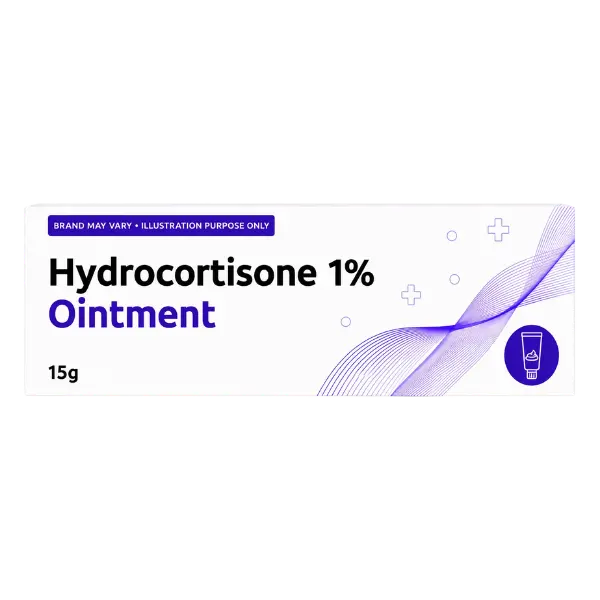
Hydrocortisone Ointment (15g)
Relieves inflammation and itching effectively
- Helps reduce redness, swelling, and itching from skin irritation
- Effective for treating mild eczema, dermatitis, and allergic rashes
- Contains hydrocortisone for targeted anti-inflammatory relief
- Ointment base provides longer-lasting hydration for dry skin
- Recommended for short-term use on affected areas only
£2.29 Available Free Delivery on Orders over £20!
In stock
| Strength | 1% |
| Size | 15 g |
Overview
How does Hydrocortisone Ointment biologically reduce inflammation?
Hydrocortisone Ointment contains the active ingredient hydrocortisone, which is a mild corticosteroid. Corticosteroids act by crossing the cell membrane and binding to specific cytoplasmic receptors within the skin cells. Once bound, this complex moves into the cell nucleus where it modifies the transcription of DNA. Specifically, Hydrocortisone Ointment works to inhibit the production of inflammatory messenger chemicals, such as prostaglandins and leukotrienes. These chemicals are responsible for the cardinal signs of inflammation: redness (erythema), swelling (oedema), and itching (pruritus). By blocking the release of these mediators, Hydrocortisone Ointment effectively “switches off” the inflammatory response at a cellular level, allowing the skin to return to a calm, normal state.
Why is the ointment base of Hydrocortisone Ointment beneficial for dry skin?
The formulation of Hydrocortisone Ointment is distinct from creams because it utilises a greasy, lipid-rich base. This base is typically composed of white soft paraffin or liquid paraffin, which gives Hydrocortisone Ointment its occlusive properties. An occlusive barrier forms a seal over the stratum corneum (the outermost layer of the skin), which physically prevents water from evaporating (Transepidermal Water Loss). This hydration is critical for treating chronic, dry, or scaly skin conditions like eczema. While creams are often absorbed quickly and are better for “weeping” sores, Hydrocortisone Ointment is designed to sit on the surface longer, providing deep moisturisation alongside the anti-inflammatory action. This makes Hydrocortisone Ointment the superior choice for areas of skin that are thickened, flaky, or lichenified due to long-term scratching.
How does Hydrocortisone Ointment induce vasoconstriction?
In addition to its anti-inflammatory effects, Hydrocortisone Ointment possesses vasoconstrictive properties. This means that when Hydrocortisone Ointment is applied to inflamed skin, it causes the tiny blood vessels (capillaries) in the upper dermis to constrict or narrow. This reduction in blood flow to the surface is what rapidly reduces the visible redness and heat associated with dermatitis and insect bites. This “blanching effect” is a key indicator of the steroid’s potency and provides immediate visual relief from the angry appearance of a flare-up.
What specific conditions does Hydrocortisone Ointment treat?
Hydrocortisone Ointment is clinically indicated for the treatment of mild to moderate eczema, allergic contact dermatitis, irritant dermatitis, and insect bite reactions. It is particularly effective for breaking the “itch-scratch cycle.” In this cycle, itching leads to scratching, which damages the skin barrier further, releasing more inflammatory chemicals and causing more itching. By relieving the pruritus (itch) and repairing the barrier through its emollient base, Hydrocortisone Ointment stops this cycle, preventing the skin from becoming raw and prone to secondary infection.
Active Ingredients
Hydrocortisone
Usage Instructions
How to apply Hydrocortisone Ointment correctly?
Hydrocortisone Ointment is for external use on the skin only.
- Dosage: Hydrocortisone Ointment should be applied sparingly. The “Fingertip Unit” (FTU) method is often recommended, where one FTU (the amount of ointment from the tip of the index finger to the first crease) is enough to treat an area the size of two adult hands.
- Application: Squeeze the ointment onto the finger and gently smooth it into the affected area in the direction of hair growth. Hydrocortisone Ointment should be rubbed in gently until it disappears.
- Frequency: Hydrocortisone Ointment should be applied once or twice a day. As the skin improves, the frequency can be reduced.
- Duration: Hydrocortisone Ointment should not be used for more than 7 days without medical advice. If the condition does not improve after one week, a doctor must be consulted.
Can Hydrocortisone Ointment be used with moisturisers?
Yes, using an emollient (moisturiser) alongside Hydrocortisone Ointment is highly recommended for eczema management. However, users should wait at least 20 to 30 minutes between applying the emollient and applying Hydrocortisone Ointment. This gap prevents the emollient from diluting the steroid or blocking its absorption into the skin.
Warnings
When must Hydrocortisone Ointment not be used?
Hydrocortisone Ointment must not be used on the face, as the skin here is thinner and more susceptible to side effects like perioral dermatitis or skin thinning (atrophy). Hydrocortisone Ointment must not be used on the eyes or eyelids, as prolonged exposure can increase the risk of glaucoma or cataracts. Hydrocortisone Ointment is not suitable for the anal or genital areas unless specifically prescribed by a doctor. Hydrocortisone Ointment must not be applied to broken or infected skin (e.g., impetigo, cold sores, athlete’s foot), as steroids can mask the spread of infection and delay healing. Hydrocortisone Ointment must not be used during pregnancy or breastfeeding without medical consultation.
What are the risks of long-term use?
Hydrocortisone Ointment is a mild steroid, but long-term or excessive use can still lead to skin thinning (atrophy), stretch marks (striae), or telangiectasia (visible thread veins). Therefore, Hydrocortisone Ointment should be used for the shortest time necessary to control symptoms.
Who Is It For
Who is Hydrocortisone Ointment suitable for?
Hydrocortisone Ointment is suitable for adults and children aged 10 years and over. Hydrocortisone Ointment is specifically designed for individuals suffering from dry, scaly, or flaky skin conditions where a cream would dry out too quickly. Hydrocortisone Ointment is an ideal choice for patients with chronic eczema patches that require intense hydration as well as steroid treatment. Hydrocortisone Ointment is suitable for treating reactions to nickel jewellery, detergent allergies, or plant irritations where the skin has become dry and cracked.
Alternatives
Common alternatives to Hydrocortisone Ointment?
If Hydrocortisone Ointment is not suitable due to the texture or the severity of the condition, common alternatives include:
- Hydrocortisone Cream: Contains the same active ingredient but in a water-based formula, making it lighter, less greasy, and more suitable for “weeping” or moist eczema compared to Hydrocortisone Ointment.
- Eurax Cream (Crotamiton): A non-steroid anti-itch cream that relieves itching for 6 to 10 hours, suitable for those who cannot use steroids or for use on the face (if advised).
- Eumovate Ointment (Clobetasone Butyrate): A stronger (moderate potency) steroid ointment for eczema or dermatitis that has not responded to mild steroids like Hydrocortisone Ointment.
- Cetraben Ointment: A non-medicated emollient ointment used to manage dry skin and eczema without any active steroid ingredients, suitable for daily maintenance between flare-ups.
At Elite Meds, we provide simple, reliable and fast delivery for all orders. We use Royal Mail exclusively, based on consistent performance and strong customer satisfaction across our website and eBay stores.
Delivery Options
Royal Mail Tracked 48 – £3.99
Royal Mail Tracked 24 – £4.49
Delivery timeframes are estimates provided by Royal Mail and are not guaranteed.
Dispatch Times
- Orders placed before 3pm Monday to Friday are dispatched the same working day.
- Orders placed after 3pm, on weekends or bank holidays are dispatched the next working day.
See our full delivery policy here


Reviews (0.0/5 stars based on 0 reviews)
There are no reviews yet.