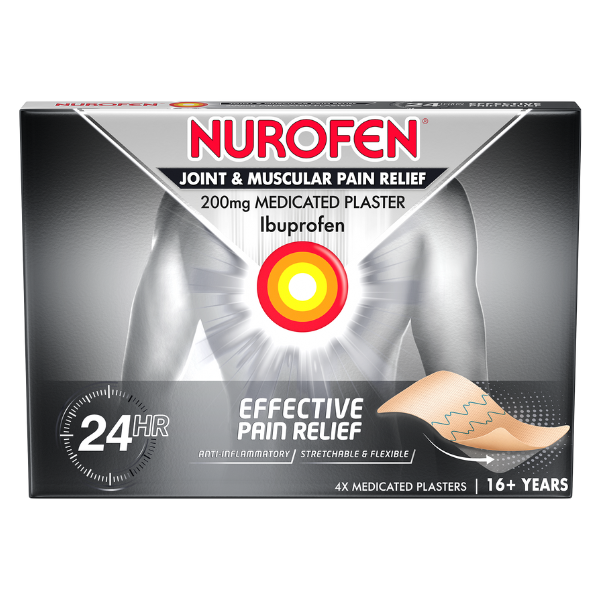
Nurofen Medicated Plasters
24-hour joint & muscular pain relief
- 24-hour pain relief
- Targets inflammation
- Easy to apply to the affected area
- Stretchable plasters
- Relieves muscular and joint pains
| Active Ingredient | — |
| Strength | — |
| Size | — |
| Flavour | — |
Overview
How do Nurofen Medicated Plasters deliver targeted pain relief?
Nurofen Medicated Plasters utilise a transdermal delivery system to administer the active ingredient, ibuprofen, directly to the site of injury. Each plaster contains 200mg of ibuprofen incorporated into an adhesive layer. When Nurofen Medicated Plasters are applied to the skin, the ibuprofen is gradually released from the adhesive matrix. It diffuses through the outer layers of the skin, known as the stratum corneum, and penetrates into the deeper underlying tissues. This local delivery mechanism ensures that the anti-inflammatory medication reaches the affected muscle or joint in high concentrations without the need for the drug to circulate through the entire body first. This targeted approach effectively reduces local pain and swelling while minimising the systemic exposure to the drug.
How does the continuous release technology in Nurofen Medicated Plasters work?
One of the key advantages of Nurofen Medicated Plasters is their ability to provide sustained efficacy. The medicated adhesive matrix is engineered to release ibuprofen at a steady, controlled rate over a 24-hour period. Unlike oral tablets which create peaks and troughs of drug concentration in the blood, Nurofen Medicated Plasters maintain a constant therapeutic level in the local tissue day and night. This continuous release means that the user only needs to apply a new plaster once a day, ensuring uninterrupted relief from pain and inflammation without the “wear-off” effect often experienced between tablet doses.
What specific injuries do Nurofen Medicated Plasters treat?
Nurofen Medicated Plasters are clinically indicated for the short-term symptomatic treatment of local pain in acute muscular strains and sprains. They are particularly effective for soft tissue injuries where inflammation is present near the surface of the skin. This includes sports injuries such as twisted ankles, strained calf muscles, or trauma to the limbs. By inhibiting the local cyclooxygenase enzymes and stopping prostaglandin production at the exact spot of the trauma, Nurofen Medicated Plasters help to resolve bruising and tenderness in the affected area.
Active Ingredients
Ibuprofen
Usage Instructions
How to apply Nurofen Medicated Plasters correctly?
For optimal adhesion and absorption, Nurofen Medicated Plasters should be applied to clean, dry, and hairless skin. The user should remove the central protective strip and press the plaster firmly onto the painful area before removing the remaining side strips. Nurofen Medicated Plasters are flexible and stretchable, allowing them to conform to contours of the body such as joints, but they must not be cut, as this can damage the integrity of the adhesive matrix and affect the dosage delivery.
How long can Nurofen Medicated Plasters be worn?
One plaster should be applied and left in place for 24 hours. After this period, the used plaster should be removed and replaced with a new one if necessary. Nurofen Medicated Plasters are designed for short-term use. The maximum duration of treatment is 5 days. If the pain does not improve after this time, the user should discontinue use and seek medical advice.
Warnings
When must Nurofen Medicated Plasters not be used?
Nurofen Medicated Plasters must not be applied to broken, damaged, or infected skin, nor should they be placed on mucous membranes or near the eyes. Nurofen Medicated Plasters are not suitable for patients who have previously had an allergic reaction to aspirin, ibuprofen, or other NSAIDs, which may have manifested as asthma or eczema. Although systemic absorption is lower than with tablets, Nurofen Medicated Plasters must not be used by patients with active peptic ulcers or severe renal failure.
Safety advice regarding pregnancy and Nurofen Medicated Plasters?
Nurofen Medicated Plasters must not be used during the last three months of pregnancy. Even though the application is topical, the ibuprofen can still be absorbed into the fetal circulation and cause complications. During the first six months of pregnancy, Nurofen Medicated Plasters should only be used if explicitly recommended by a doctor.
Who Is It For
Who are Nurofen Medicated Plasters suitable for?
Nurofen Medicated Plasters are suitable for adults and adolescents aged 16 years and over. They are an excellent option for individuals who struggle with swallowing tablets or those who prefer to avoid oral NSAIDs due to mild stomach sensitivity. Nurofen Medicated Plasters are not suitable for children under 16 years of age.
Alternatives
Common alternatives to Nurofen Medicated Plasters?
If Nurofen Medicated Plasters are not suitable due to the adhesive format or medical history, common alternatives include:
- Voltarol 12 Hour Gel: A topical gel containing diclofenac that is massaged into the skin twice a day to treat local inflammation and pain.
- Deep Heat Pain Relief Patches: Non-medicinal patches that generate heat to increase blood flow and relax stiff, aching muscles without using NSAIDs.
- Nurofen Joint & Back Caplets: An oral ibuprofen option for those who prefer systemic relief or have pain that is too deep for a plaster to reach effectively.
- Biofreeze Pain Relief Gel: A cryotherapy gel that uses menthol to cool the area and distract the nerves from pain signals, suitable for use alongside oral medications.
At Elite Meds, we provide simple, reliable and fast delivery for all orders. We use Royal Mail exclusively, based on consistent performance and strong customer satisfaction across our website and eBay stores.
Delivery Options
Royal Mail Tracked 48 – £3.99
Royal Mail Tracked 24 – £4.49
Delivery timeframes are estimates provided by Royal Mail and are not guaranteed.
Dispatch Times
- Orders placed before 3pm Monday to Friday are dispatched the same working day.
- Orders placed after 3pm, on weekends or bank holidays are dispatched the next working day.
See our full delivery policy here
You May Like These
View All

Reviews (0.0/5 stars based on 0 reviews)
There are no reviews yet.