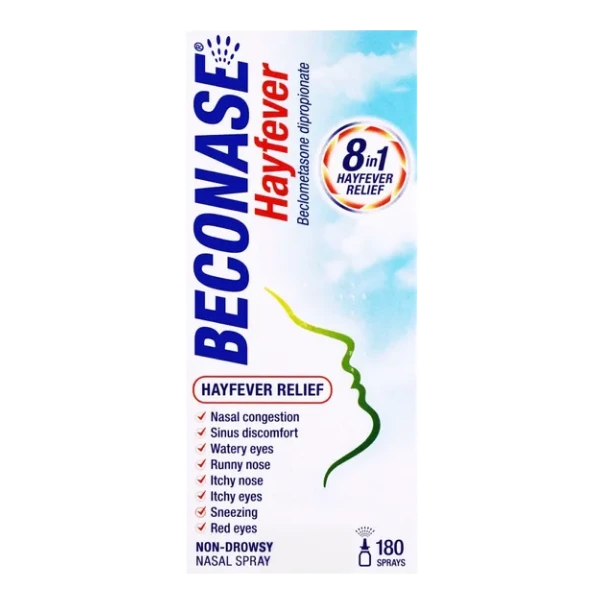
Beconase Hayfever Relief (180 dose)
Nasal spray for the relief of symptoms caused by hay fever
- Treats nasal congestion
- Treats sinus discomfort
- Hayfever symptom relief
- Relieves itchy eyes
- Non-drowsy
£9.89 Available Free Delivery on Orders over £20!
In stock
| Size | 180 dose |
Overview
How does Beconase Hayfever Relief work?
Beconase Hayfever Relief is a highly effective nasal spray specifically designed to treat and prevent the symptoms of hay fever. The active ingredient is beclometasone dipropionate which belongs to a group of medicines called corticosteroids. Unlike antihistamines that block the effects of histamine after it has been released Beconase Hayfever Relief works by reducing inflammation in the nose. By dampening down the inflammatory response in the nasal lining Beconase Hayfever Relief stops the release of the chemicals that cause the allergic reaction in the first place. This preventative action makes Beconase Hayfever Relief a long-term solution for managing allergies throughout the pollen season.
What symptoms does Beconase Hayfever Relief treat?
Beconase Hayfever Relief targets the full range of hay fever symptoms that affect the nose and eyes. Beconase Hayfever Relief is particularly effective at clearing a blocked nose which is a symptom that antihistamine tablets often fail to resolve. In addition to congestion Beconase Hayfever Relief relieves sneezing and a runny nose and itchy nose. Surprisingly for a nasal spray Beconase Hayfever Relief also helps to alleviate itchy and watery eyes which are frequently associated with allergic rhinitis. Beconase Hayfever Relief is effective against allergies caused by grass pollen and tree pollen as well as indoor allergens like dust mites and pet hair.
How long does Beconase Hayfever Relief take to work?
Beconase Hayfever Relief is not a quick-fix decongestant that works instantly. Beconase Hayfever Relief builds up a protective effect over time. Some users may notice an improvement within a few hours of the first dose but it typically takes two or three days of regular use for the medication to reach its full effectiveness.
Active Ingredients
Beclometasone dipropionate
Usage Instructions
How to use Beconase Hayfever Relief correctly?
The recommended dosage for adults is two sprays into each nostril twice a day usually in the morning and evening. Once the symptoms are under control the dose can often be reduced to one spray in each nostril twice a day. To use the spray the user should shake the bottle gently and remove the dust cap. The user should blow their nose to clear it before use. Tilt the head forward slightly and insert the nozzle into one nostril while closing the other with a finger. Squeeze the bottle or press down on the collar to release a spray while breathing in gently through the nose. Repeat for the other nostril. Wipe the nozzle with a clean tissue after use.
How long can Beconase Hayfever Relief be used for?
Beconase Hayfever Relief can be used for up to three months continuously without a prescription. If symptoms persist longer than three months the user should consult a doctor. Users should not use Beconase Hayfever Relief continuously for more than one month after opening the bottle unless advised by a healthcare professional.
Warnings
When should Beconase Hayfever Relief be avoided?
Beconase Hayfever Relief should not be used by anyone under 18 years of age unless prescribed by a doctor. Users should avoid Beconase Hayfever Relief if they have an active nose infection or if they have recently had nasal surgery or an injury to the nose as steroids can slow down wound healing. Beconase Hayfever Relief contains benzalkonium chloride which may cause nasal irritation or swelling in some long-term users.
Safety advice regarding eyes?
Users must take care to avoid getting the spray into the eyes. If Beconase Hayfever Relief accidentally comes into contact with the eyes the eyes should be rinsed immediately with water. While Beconase Hayfever Relief helps with eye symptoms caused by allergies it is not an eye drop and should not be applied directly to the eye.
Who Is It For
Who is Beconase Hayfever Relief suitable for?
Beconase Hayfever Relief is suitable for adults aged 18 years and over. Beconase Hayfever Relief is the ideal choice for individuals whose hay fever symptoms are moderate to severe and disrupt their sleep or daily life. Beconase Hayfever Relief is also suitable for those who find that oral antihistamines cause drowsiness or are not effective enough on their own. Pregnant women and breastfeeding mothers should consult a doctor before using Beconase Hayfever Relief although corticosteroids in nasal sprays are generally considered safer than oral steroids due to lower systemic absorption.
Alternatives
Common alternatives to Beconase Hayfever Relief?
If Beconase Hayfever Relief is not suitable or a different application is preferred common alternatives include:
- Piramase Hayfever Relief: Another steroid nasal spray containing fluticasone propionate which is taken once a day.
- Prevalin Allergy: A non-medicated barrier cream nasal spray that blocks pollen from entering the nasal lining suitable for pregnant women.
- Sudafed Blocked Nose Spray: A decongestant spray containing xylometazoline which works instantly but can only be used for up to 7 days.
- Optrex Itchy Eye Drops: Drops specifically for treating allergic eyes if the nasal spray does not resolve eye symptoms effectively.
At Elite Meds, we provide simple, reliable and fast delivery for all orders. We use Royal Mail exclusively, based on consistent performance and strong customer satisfaction across our website and eBay stores.
Delivery Options
Royal Mail Tracked 48 – £3.99
Royal Mail Tracked 24 – £4.49
Delivery timeframes are estimates provided by Royal Mail and are not guaranteed.
Dispatch Times
- Orders placed before 3pm Monday to Friday are dispatched the same working day.
- Orders placed after 3pm, on weekends or bank holidays are dispatched the next working day.
See our full delivery policy here


Reviews (0.0/5 stars based on 0 reviews)
There are no reviews yet.