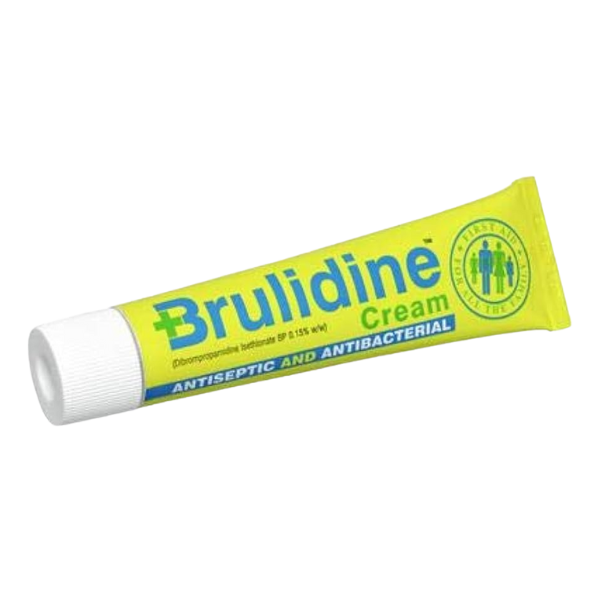
Brulidine Antiseptic Cream (25g)
Soothing antiseptic cream for minor cuts, grazes, and infected skin
- Soothes and protects minor cuts, grazes, and skin infections
- Contains dibrompropamidine isethionate with antibacterial action
- Promotes healing while reducing inflammation and discomfort
- Suitable for everyday first aid and minor wounds
- Gentle formula suitable for adults and children
£3.99 Available Free Delivery on Orders over £20!
In stock
| Size | 25 g |
Overview
How does Brulidine Antiseptic Cream biologically eliminate bacteria?
Brulidine Antiseptic Cream contains the active pharmaceutical ingredient dibrompropamidine isethionate at a concentration of 0.15% w/w. This compound belongs to a class of antimicrobial agents known as aromatic diamidines. Biologically, Brulidine Antiseptic Cream functions by disrupting the essential metabolic processes within pathogenic microorganisms. Upon application to infected or damaged skin, the dibrompropamidine molecules penetrate the bacterial cell wall and interfere with the uptake of amino acids and the synthesis of DNA and RNA. By blocking these critical pathways, Brulidine Antiseptic Cream effectively halts the replication of the bacteria (bacteriostatic action) and, at sufficient concentrations, destroys the bacterial cell structure (bactericidal action). This mechanism allows Brulidine Antiseptic Cream to control and eradicate a wide spectrum of bacteria, particularly Gram-positive strains such as Staphylococcus aureus and Streptococci, which are the primary culprits in common skin infections.
What is the dual-action antifungal property of Brulidine Antiseptic Cream?
A distinctive pharmacological advantage of Brulidine Antiseptic Cream is its broad-spectrum capability, which extends beyond simple antibacterial action to include antifungal properties. Many skin irritations, such as ringworm or nappy rash, can be caused or complicated by fungal organisms. The dibrompropamidine isethionate in Brulidine Antiseptic Cream is effective against certain fungi and yeasts. This dual-action profile makes Brulidine Antiseptic Cream clinically valuable for treating “mixed infections” where both bacteria and fungi may be present, or where the exact cause of the minor skin lesion is not immediately clear. This versatility ensures that the wound environment is sterilised comprehensively, preventing opportunistic pathogens from delaying the healing process.
What specific conditions is Brulidine Antiseptic Cream indicated for?
Brulidine Antiseptic Cream is clinically indicated for the treatment of minor cuts, grazes, burns, and scalds to prevent infection during the healing phase. Furthermore, Brulidine Antiseptic Cream is specifically effective for treating superficial skin infections such as impetigo, otitis externa (inflammation of the outer ear canal), and sycosis barbae (infection of the hair follicles in the beard area, often caused by shaving). Brulidine Antiseptic Cream is also widely used for the prevention and treatment of nappy rash in infants, where its antiseptic action kills the bacteria that break down urine into ammonia, thereby soothing the inflammation and protecting the delicate skin barrier.
Active Ingredients
Dibrompropamidine isetionate
Usage Instructions
How to apply Brulidine Antiseptic Cream correctly?
Brulidine Antiseptic Cream is for topical application to the skin only.
- Preparation: The user should wash their hands thoroughly before use. The affected area of skin should be cleaned with water or a saline wipe and dried gently.
- Application: Apply a generous amount of Brulidine Antiseptic Cream directly to the wound or infected area.
- Massage: Brulidine Antiseptic Cream can be smoothed gently into the skin, or applied on a piece of surgical gauze or lint if a dressing is required.
- Frequency: Brulidine Antiseptic Cream should be applied two to three times a day.
- Duration: Treatment should continue until the lesion has healed. If symptoms persist for more than a few days, medical advice should be sought.
How to use Brulidine Antiseptic Cream for nappy rash?
When using Brulidine Antiseptic Cream for nappy rash, the nappy area should be cleaned and dried thoroughly during each change. Brulidine Antiseptic Cream should then be applied smoothly over the inflamed area before putting on a fresh nappy. This ensures the antiseptic agent is in constant contact with the skin to neutralise bacteria and fungi that thrive in the warm, moist environment of a nappy.
Warnings
When must Brulidine Antiseptic Cream not be used?
Brulidine Antiseptic Cream must not be used by patients who have a known hypersensitivity or allergy to dibrompropamidine isethionate or any of the excipients in the cream base, such as cetostearyl alcohol or castor oil. Brulidine Antiseptic Cream is for external use only and must not be swallowed. Brulidine Antiseptic Cream should not be used for prolonged periods on large areas of the body without medical supervision. If the skin condition worsens or if the user experiences a burning sensation or rash after applying Brulidine Antiseptic Cream, use should be discontinued immediately.
Who Is It For
Who is Brulidine Antiseptic Cream suitable for?
Brulidine Antiseptic Cream is suitable for use by the whole family, including adults, the elderly, and infants. Brulidine Antiseptic Cream is specifically designed for individuals suffering from minor skin trauma who require a reliable antiseptic to prevent sepsis. Brulidine Antiseptic Cream is an ideal choice for parents treating nappy rash in babies, as well as for men suffering from infected shaving rashes. Brulidine Antiseptic Cream is suitable for first-aid kits in homes and workplaces to manage everyday accidental injuries.
Alternatives
Common alternatives to Brulidine Antiseptic Cream?
If Brulidine Antiseptic Cream is not suitable due to availability or specific allergy, common alternatives include:
- Savlon Antiseptic Cream: Contains chlorhexidine and cetrimide, providing a broad-spectrum cleaning and soothing action for minor wounds, similar to Brulidine Antiseptic Cream but with different active ingredients.
- Germolene Antiseptic Cream: Contains phenol and chlorhexidine, offering both antiseptic action and a local anaesthetic effect to numb pain, which Brulidine Antiseptic Cream does not provide.
- Bepanthen Nappy Care Ointment: A preventative barrier ointment containing pro-vitamin B5 (dexpanthenol) to aid skin recovery, often used for nappy rash when an antiseptic like Brulidine Antiseptic Cream is not required.
- Crystacide Cream: Contains hydrogen peroxide (lipid stabilised), which releases oxygen to clean and disinfect infected eczema or impetigo, often used as a direct alternative for skin infections.
- Daktarin Cream (Miconazole): If the condition is purely fungal (like severe ringworm or fungal nappy rash), a dedicated antifungal cream may be more appropriate than the broad-spectrum action of Brulidine Antiseptic Cream.
At Elite Meds, we provide simple, reliable and fast delivery for all orders. We use Royal Mail exclusively, based on consistent performance and strong customer satisfaction across our website and eBay stores.
Delivery Options
Royal Mail Tracked 48 – £3.99
Royal Mail Tracked 24 – £4.49
Delivery timeframes are estimates provided by Royal Mail and are not guaranteed.
Dispatch Times
- Orders placed before 3pm Monday to Friday are dispatched the same working day.
- Orders placed after 3pm, on weekends or bank holidays are dispatched the next working day.
See our full delivery policy here
You May Like These
View All


Reviews (0.0/5 stars based on 0 reviews)
There are no reviews yet.