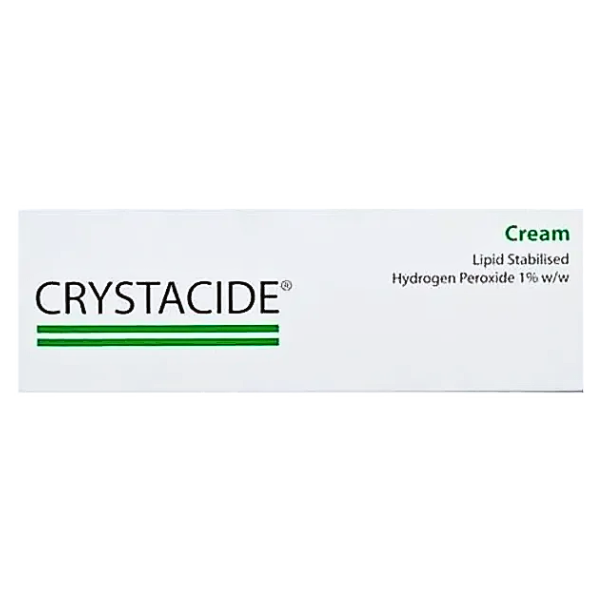
Crystacide Cream (25g)
Antiseptic cream for minor superficial skin infections
- Treats skin infections and prevents bacterial growth
- Contains hydrogen peroxide for antiseptic action
- Helps heal minor cuts, grazes, and acne spots
- Non-greasy and gentle on the skin
- Suitable for daily use on affected areas
£12.79 Available Free Delivery on Orders over £20!
In stock
| Strength | 1% w/w |
| Size | 25 g |
Overview
How does Crystacide Cream (25g) treat skin infections?
Crystacide Cream is a potent antimicrobial agent used to treat superficial skin infections. The active ingredient is Hydrogen Peroxide (1% w/w). Unlike liquid peroxide which evaporates quickly, Crystacide is formulated in a stabilised lipid cream base. When applied to the skin, the cream releases active oxygen slowly and continuously. This oxidation process destroys the cell walls of bacteria, effectively killing a broad spectrum of organisms (bactericidal action). Because it works through a chemical mechanism rather than a biological one, bacteria typically cannot develop resistance to it.
Why is Crystacide Cream (25g) a preferred alternative to antibiotics?
One of the key benefits of Crystacide Cream is that it contains no antibiotics. In an era where antibiotic resistance (e.g., MRSA) is a growing concern, Crystacide offers an effective treatment for common infections like impetigo without contributing to this problem. It is often prescribed or recommended as a first-line treatment instead of topical antibiotics like Fusidic Acid (Fucidin), particularly for localized infections where oral medication is not yet required.
Does Crystacide Cream (25g) dry out the skin?
Hydrogen peroxide is traditionally known to be drying, but Crystacide Cream is formulated to prevent this. The unique lipid-based cream acts as an emollient, moisturising the skin while the peroxide works. This ensures that the infected area remains hydrated and flexible, reducing the risk of cracking or scabbing which can delay healing.
Active Ingredients
Hydrogen Peroxide
Usage Instructions
How to apply Crystacide Cream (25g) correctly?
To ensure the infection is eradicated, consistent application is necessary.
- Cleanse: Wash hands thoroughly before and after use. Clean the affected skin area with water and a mild antiseptic if required, then dry gently.
- Apply: Squeeze a small amount of Crystacide Cream onto a clean fingertip.
- Rub: Apply a thin layer over the affected area and rub it in gently.
- Frequency: Apply 2 to 3 times daily.
- Duration: Treatment should not typically exceed 3 weeks (21 days). If symptoms persist after this time, medical advice should be sought.
Can Crystacide Cream (25g) be used under a dressing?
Yes, if necessary, the treated area can be covered with a dry dressing. However, the cream is generally effective when left uncovered, as this allows the oxygen to work freely.
Warnings
When must Crystacide Cream (25g) be used with caution?
Sensation: A mild burning or stinging sensation may be felt for a short time after application. This is a normal reaction to the antiseptic action of hydrogen peroxide. Bleaching: Hydrogen peroxide is a bleaching agent. Users must take care to avoid contact with clothing, bedding, or furniture, as Crystacide Cream can permanently bleach fabrics. Eyes: Avoid all contact with the eyes. If the cream enters the eyes, rinse immediately with plenty of water. Incompatibility: Crystacide Cream should not be used at the same time as products containing Iodine, Potassium Permanganate, or Salicylic Acid, as they can react chemically with the peroxide.
Who Is It For
Who is Crystacide Cream (25g) suitable for?
Crystacide Cream is suitable for adults, the elderly, and children. It is specifically indicated for the treatment of minor cutaneous infections, such as impetigo, infected eczema, infected cuts, and grazes. It is an ideal choice for patients who have developed a resistance to standard topical antibiotics or for those who wish to avoid using antibiotic creams for minor issues.
Alternatives
Common alternatives to Crystacide Cream (25g)?
If Crystacide Cream is not suitable due to the bleaching risk or availability, common alternatives include:
- Fucidin Cream (Prescription Only): Contains Fusidic Acid, a topical antibiotic used for similar infections like impetigo, though resistance is more common than with Crystacide.
- Bactroban (Prescription Only): Contains Mupirocin, another strong topical antibiotic often reserved for MRSA or severe infections.
- Savlon Advanced Healing Gel: A hydrocolloid gel that creates a moist healing environment for cuts and grazes, preventing infection rather than actively killing established bacteria like Crystacide.
- Germolene Antiseptic Cream: Contains Chlorhexidine and Phenol; good for preventing infection in minor cuts but less effective than Crystacide for treating an established skin infection like impetigo.
- Medihoney (Medical Grade Honey): A natural alternative that uses the antibacterial properties of Manuka honey to treat infected wounds without chemicals.
At Elite Meds, we provide simple, reliable and fast delivery for all orders. We use Royal Mail exclusively, based on consistent performance and strong customer satisfaction across our website and eBay stores.
Delivery Options
Royal Mail Tracked 48 – £3.99
Royal Mail Tracked 24 – £4.49
Delivery timeframes are estimates provided by Royal Mail and are not guaranteed.
Dispatch Times
- Orders placed before 3pm Monday to Friday are dispatched the same working day.
- Orders placed after 3pm, on weekends or bank holidays are dispatched the next working day.
See our full delivery policy here
You May Like These
View All



Reviews (0.0/5 stars based on 0 reviews)
There are no reviews yet.