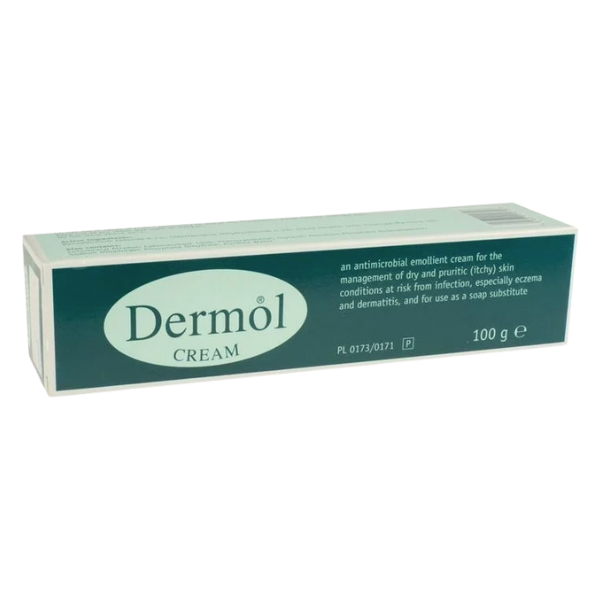
Dermol Cream (100g)
Antimicrobial emollient to moisturise and protect eczema-prone, itchy skin
- Moisturises and soothes dry or inflamed skin
- Contains antimicrobial agents to protect against infection
- Can be used as a moisturiser or soap substitute
- Suitable for eczema, dermatitis, and psoriasis
- Fragrance-free and ideal for sensitive skin
£4.59 Available Free Delivery on Orders over £20!
In stock
| Size | 100 g |
Antimicrobial Emollient for Dry, Itchy and Eczema-Prone Skin
Dermol Cream Overview
Dermol Cream is a medicated emollient used to help manage dry, itchy and eczema-prone skin, particularly where there is a risk of secondary bacterial infection. It combines moisturising emollients with antimicrobial agents, helping to hydrate the skin while reducing bacterial colonisation that can worsen symptoms.
In the UK, Dermol Cream is available as an over-the-counter pharmacy medicine and is widely recommended in dermatology for both adults and children as part of ongoing skin care.
Understanding Dry and Eczema-Prone Skin
Why dry skin becomes inflamed
Conditions such as eczema (atopic dermatitis) are associated with a damaged skin barrier, allowing moisture to escape and irritants or bacteria to penetrate more easily. This leads to dryness, itching, redness and inflammation.
Scratching further damages the skin, increasing the risk of infection and creating a cycle of irritation and flare-ups.
The role of antimicrobial emollients
Standard emollients restore moisture, but antimicrobial emollients like Dermol also help reduce bacterial load on the skin, which is particularly useful in eczema-prone individuals where Staphylococcus aureus commonly contributes to flare severity.
What Is Dermol Cream?
Dermol Cream is a leave-on antimicrobialemollient containing:
- Benzalkonium chloride
- Chlorhexidine dihydrochloride
These agents provide antibacterial action, while the emollient base hydrates and softens the skin. Dermol can be used both as a moisturiser and as a soap substitute, helping to avoid further skin barrier disruption caused by conventional soaps.
How Does Dermol Cream Work?
Moisturising and barrier support
Dermol helps restore hydration by forming a protective layer on the skin that reduces transepidermal water loss. Regular use improves skin softness, flexibility and comfort.
Antimicrobial protection
The antibacterial ingredients help reduce skin bacteria that can aggravate eczema and other dry skin conditions, lowering the risk of infection and supporting healing during flare-ups.
What Dermol Helps With — and What It Does Not
What it helps with
Dermol Cream is commonly used to help manage:
- eczema and dermatitis
- dry, itchy or cracked skin
- infected or infection-prone eczema
- soap-related skin irritation
- maintenance of compromised skin barriers
It is suitable for long-term use as part of a daily skin care routine.
What it does not treat
Dermol does not:
- replace topical steroids when inflammation is severe
- treat fungal skin infections
- cure underlying dermatological disease
- substitute medical assessment for worsening symptoms
Active inflammation or infection may require additional treatment.
How Dermol Fits into Eczema Care
Dermol vs standard emollients
Standard emollients focus on hydration alone. Dermol offers additional antimicrobial protection, which can be helpful in eczema-prone or infection-susceptible skin.
Dermol and topical steroids
Dermol supports daily maintenance, while topical steroids are used short-term during inflammatory flare-ups. The two are often used together under medical guidance.
Dermol Cream Summary
Dermol Cream (100 g) provides effective moisturisation combined with antibacterial protection for dry, itchy and eczema-prone skin. Used regularly, it helps restore the skin barrier, reduce irritation and lower the risk of infection as part of a comprehensive skin care routine.
Persistent or worsening skin symptoms should always be assessed by a healthcare professional.
Active Ingredients
Benzalkonium chloride, Chlorhexidine dihydrochloride, Liquid paraffin, Isopropyl myristate
How to Use Dermol Cream
Apply liberally to affected areas as often as needed, particularly after washing. Dermol can also be used as a soap substitute by applying to wet skin and rinsing off gently.
Regular, generous application is important for maintaining skin hydration and reducing flare-ups.
Safety, Warnings and Side Effects
Dermol Cream is generally well tolerated. Rarely, people may experience local skin irritation or sensitivity. If this occurs, discontinue use and seek advice.
Avoid contact with eyes and mucous membranes.
When to Seek Medical Advice
Speak to a healthcare professional if:
- eczema worsens or becomes painful
- skin becomes red, oozing or infected
- itching disrupts sleep
- symptoms do not improve with regular use
These may indicate a need for prescription treatment.
Use in Pregnancy and Breastfeeding
Dermol Cream can generally be used during pregnancy and breastfeeding, as it acts locally on the skin. If symptoms are severe or widespread, medical advice should be sought.
Who Is Dermol Cream For?
Dermol Cream may be suitable for:
- adults and children with eczema-prone skin
- people with recurrent skin infections
- individuals with dry or irritated skin worsened by soap use
- those needing an antimicrobial moisturiser
It can be used on most areas of the body, including hands.
Who Should Avoid Dermol
Avoid use if:
- you are allergic to chlorhexidine or benzalkonium chloride
- irritation or sensitivity develops after application
A pharmacist can advise on suitability, particularly for young children or sensitive skin.
Alternatives
What are the main alternative products available?
If Dermal Cream is unsuitable or an alternative emollient formulation is required, the following options may be considered:
-
E45 Cream: A non-greasy emollient cream containing white soft paraffin, liquid paraffin, and unsaturated fat to soothe dry, itchy skin and eczema.
-
Cetraben Cream: A hydrating emollient cream formulated with white soft paraffin and liquid paraffin to manage eczema, psoriasis, and dry skin conditions.
-
AproDerm Emollient Cream: A soothing, formulation-focused emollient cream designed to rehydrate sensitive skin without added fragrances or common sensitising additives.
-
Dermol 500 Lotion: An antimicrobial emollient lotion containing liquid paraffin, isopropyl myristate, benzalkonium chloride, and chlorhexidine dihydrochloride to moisturise and control skin surface bacteria.
At Elite Meds, we provide simple, reliable and fast delivery for all orders. We use Royal Mail exclusively, based on consistent performance and strong customer satisfaction across our website and eBay stores.
Delivery Options
Royal Mail Tracked 48 – £3.99
Royal Mail Tracked 24 – £4.49
Delivery timeframes are estimates provided by Royal Mail and are not guaranteed.
Dispatch Times
- Orders placed before 3pm Monday to Friday are dispatched the same working day.
- Orders placed after 3pm, on weekends or bank holidays are dispatched the next working day.
See our full delivery policy here
You May Like These
View All

Reviews (0.0/5 stars based on 0 reviews)
There are no reviews yet.