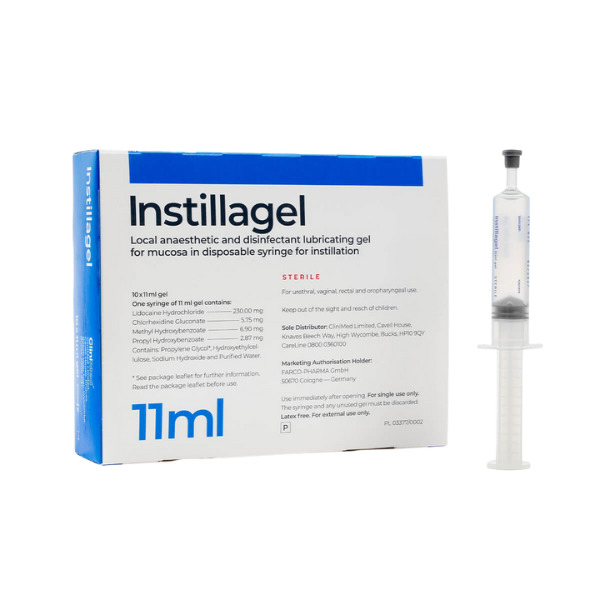
Instillagel Pre-filled Syringes (10 x 11ml)
Lubricating gel for medical procedures
- Sterile gel used for lubrication during medical procedures
- Contains lidocaine for local anaesthetic effect
- Reduces discomfort and irritation during catheterisation or examination
- Ready-to-use pre-filled syringes ensure hygienic application
- Provides both numbing and antiseptic action
£19.49 Available Free Delivery on Orders over £20!
In stock
| Size | 11 ml x 10 |
Local Anaesthetic Gel for Minor Procedures and Catheterisation
Instillagel Pre-Filled Syringes Overview
Instillagel Pre-Filled Syringes are a topical local anaesthetic gel used to provide temporary numbness and lubrication of mucous membranes before minor procedures such as catheterisation, cystoscopy, or urethral examination. It contains lidocaine hydrochloride, which numbs the surface it contacts, helping reduce discomfort during instrumentation.
In the UK, Instillagel is classed as a medical device, not a medicinal drug, and is supplied in pre-filled syringes for hygienic, ready-to-use application.
Understanding Local Anaesthesia for Mucosal Procedures
Why mucosal anaesthesia is needed
Procedures involving the urethra or other mucosal surfaces can cause pain or discomfort due to the high sensitivity of these tissues. Applying a local anaesthetic gel beforehand helps:
- reduce pain during insertion of probes, catheters, or instruments
- relax local muscle tone
- improve procedural tolerance for the patient
This approach is widely used in primary care, urology, and hospital settings.
What lidocaine does
Lidocaine is a well-established local anaesthetic that blocks nerve conduction when applied topically. It works quickly and provides numbness at the site of application without affecting the rest of the body when used as directed.
What Are Instillagel Pre-Filled Syringes?
Instillagel Pre-Filled Syringes consist of a sterile gel containing lidocaine hydrochloride (typically 2% w/w) combined with a lubricant base. The gel is supplied in individually sealed, single-use 11 ml syringes, making it convenient and hygienic for clinical use.
The product is often used:
- prior to urinary catheterisation
- before cystoscopic procedures
- before passage of instruments across sensitive mucosal areas
It helps reduce discomfort and provides lubrication to ease instrument insertion.
How Does Instillagel Work?
Mechanism of action
Lidocaine in Instillagel blocks sodium channels in nerve membranes at the application site. This prevents nerve depolarisation and transmission of pain signals to the brain. The result is localised numbness that reduces the sensation of discomfort during procedures.
Onset and duration
Instillagel’s anaesthetic effect typically begins within a few minutes of application. The duration of action is sufficient to cover most short procedures requiring instrument passage.
What Instillagel Helps With — and What It Does Not
What it helps with
Instillagel is used to:
- reduce discomfort during urethral catheterisation in adults and children
- provide local numbing before minor cystoscopy or urological examination
- improve patient comfort during insertion of probes or instruments where topical lubrication and anaesthesia are required
What it does not treat
Instillagel does not:
- treat infection, inflammation, or underlying urinary conditions
- cure catheter-associated discomfort after the procedure
- replace general anaesthesia for invasive surgery
If pain or symptoms persist after the procedure, clinical assessment is needed.
Instillagel Pre-Filled Syringes Summary
Instillagel Pre-Filled Syringes provide effective local topical anaesthesia and lubrication for procedures involving sensitive mucosal areas such as the urethra. With lidocaine as the active anaesthetic, they help reduce discomfort during short procedures and improve patient experience when used as directed by trained professionals.
Active Ingredients
Lidocaine Hydrochloride
How to Use Instillagel Pre-Filled Syringes
Application guidance
- Ensure the syringe is unopened and sterile
- Attach appropriate catheter or applicator if required
- Instill the gel slowly into the urethral meatus or target mucosa
- Allow a few minutes for the anaesthetic effect before proceeding
Dosage and application method should follow local clinical protocols and manufacturer instructions.
Practical usage advice
- Do not reuse pre-filled syringes
- Monitor the patient for comfort and adverse reactions
- Ensure appropriate record-keeping and disposal as clinical waste
Safety, Warnings and Side Effects
Local side effects
Some patients may experience:
- mild burning or stinging at application
- temporary numbness beyond the site
- minor irritation
These effects are usually transient.
Systemic considerations
Although lidocaine is largely localised, systemic absorption can occur, particularly with large volumes or damaged mucosa. Signs of systemic lidocaine effects include dizziness, tinnitus, or numbness beyond the site; these require clinical evaluation.
When to Seek Medical Advice
Healthcare professionals should reassess if:
- discomfort does not improve with local anaesthesia
- there are signs of allergic reaction (rash, swelling, difficulty breathing)
- systemic symptoms develop after application
- the underlying condition appears more serious
Use in Pregnancy and Breastfeeding
Instillagel may be used in pregnancy or breastfeeding if clinically indicated, as systemic absorption is minimal when applied topically. However, clinical judgement and specialist guidance should be sought.
Who Is Instillagel Suitable For?
Instillagel may be suitable for:
- adults and children (according to professional guidance) undergoing short mucosal procedures
- patients requiring urethral catheterisation
- use in primary care, secondary care, and community settings
It is typically administered by trained healthcare professionals as part of a procedure.
Who Should Avoid Instillagel
Instillagel should not be used if:
- the patient has known allergy to lidocaine or any component of the gel
- the mucosa is severely inflamed or ulcerated unless advised
- there is a risk of aspiration into the airway
Blood levels of lidocaine should be considered in patients with severe liver impairment, as lidocaine metabolism is hepatic.
How Instillagel Compares to Other Local Anaesthetics
Instillagel vs lidocaine sprays or ointments
Instillagel provides a gel vehicle with lubrication, making it particularly suitable for instrument passage, whereas sprays or ointments may be more applicable to other mucosal surfaces.
Instillagel vs injectable local anaesthetics
Injectable anaesthetics are used for deeper blockade. Instillagel provides surface numbing only and is appropriate for non-invasive procedures.
Supporting Comfort and Procedure Tolerance
To maximise comfort:
- explain the procedure to the patient
- apply gel and allow time for effect before instrument insertion
- combine oral analgesia where appropriate
Reviews (5.0/5 stars based on 1 reviews)
At Elite Meds, we provide simple, reliable and fast delivery for all orders. We use Royal Mail exclusively, based on consistent performance and strong customer satisfaction across our website and eBay stores.
Delivery Options
Royal Mail Tracked 48 – £3.99
Royal Mail Tracked 24 – £4.49
Delivery timeframes are estimates provided by Royal Mail and are not guaranteed.
Dispatch Times
- Orders placed before 3pm Monday to Friday are dispatched the same working day.
- Orders placed after 3pm, on weekends or bank holidays are dispatched the next working day.
See our full delivery policy here

David Thompson ·
Easy to use and exactly as described. Individually packed syringes make everything much more convenient. Would happily order again.