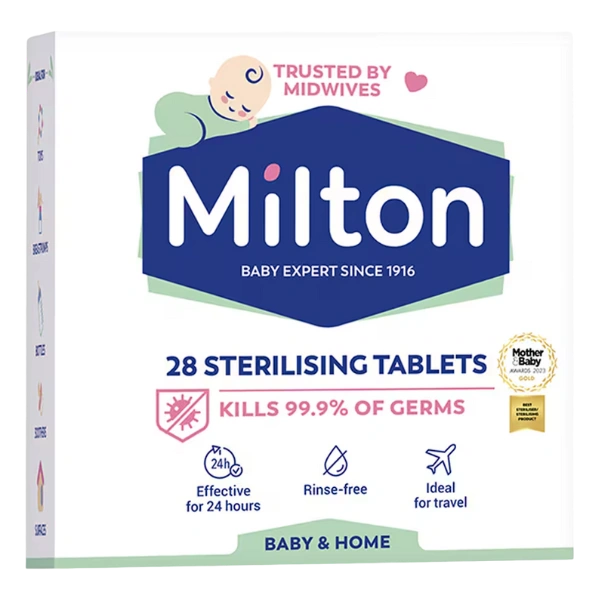
Milton Sterilising Tablets (28)
Cold-water sterilising tablets for baby bottles and accessories
- Kills bacteria, fungi, and viruses on baby feeding equipment
- Ideal for bottles, breast pumps, and soothers
- Works in just 15 minutes for fast sterilisation
- No need to rinse after use
- Safe and effective for everyday hygiene
£2.69 Available Free Delivery on Orders over £20!
In stock
| Size | 28 Tablets |
Overview
How do Milton Sterilising Tablets (28) destroy harmful pathogens?
Milton Sterilising Tablets rely on the active ingredient Sodium Dichloroisocyanurate (NaDCC). When dissolved in cold water, this compound releases a precise concentration of hypochlorous acid. This is a powerful oxidising agent that attacks the cell walls of bacteria, viruses, and fungi. By penetrating the cell membrane and disrupting the internal protein structures, the solution neutralises 99.9% of germs, including tough bacteria like E. coli, Salmonella, and Listeria, as well as viruses such as Rotavirus and Candida albicans (thrush). This chemical action ensures that baby feeding equipment is clinically sterilised without the need for boiling or heating.
Why is the no-rinse formula of Milton Sterilising Tablets (28) safe?
A common misconception is that the chlorine scent left behind by the solution is harmful. However, the solution created by Milton Sterilising Tablets is hypotonic and formulated to be completely safe for consumption by infants. Once the sterilised item is removed from the fluid, the residual trace amount of chlorine degrades rapidly into harmless salt and water upon contact with organic matter, such as milk or saliva. Therefore, there is no need to rinse the items with tap water before use. Rinsing with tap water actually reintroduces bacteria to the sterilised surface, undoing the work of the tablets.
How do Milton Sterilising Tablets (28) offer convenience for travel?
Unlike steam sterilisers or microwave units which require electricity and bulky equipment, Milton Sterilising Tablets provide a portable method of cold water sterilisation. A single tablet and a container of water are all that is required to create a sterile environment. This makes the product essential for parents travelling or visiting friends, as it allows for the effective sterilisation of bottles, soothers, and breast pump parts in a hotel sink or plastic tub within just fifteen minutes.
Usage Instructions
How to prepare the solution using Milton Sterilising Tablets (28)?
To use the product, the user must first wash all items (bottles, teats, etc.) thoroughly in warm soapy water and rinse with cold water to remove any milk residue. Milk residue can reduce the effectiveness of the chlorine. The user should then fill a plastic container with 5 litres of cold tap water. One Milton Sterilising Tablet should be dropped into the water. The tablet will effervesce and dissolve completely.
How to sterilise items with Milton Sterilising Tablets (28)?
Once the tablet has dissolved, the user must submerge the items into the solution. It is vital to ensure that no air bubbles are trapped inside bottles or teats, as the solution must touch every surface to sterilise it. A floating cover or plate can be used to keep items submerged. The items must remain in the solution for a minimum of 15 minutes. The solution stays active for 24 hours, so parents can add and remove items throughout the day as needed. When ready to use, the item should be removed, the excess water shaken off, and used immediately without rinsing.
Warnings
When must Milton Sterilising Tablets (28) be used with caution?
The solution creates a bleaching agent. Care must be taken not to splash the solution onto fabrics, clothing, or carpets as it will cause permanent discolouration. Users should avoid using the solution on metal items (such as silver or lower-grade steel) for prolonged periods as it may cause corrosion or pitting over time.
Who Is It For
Who are Milton Sterilising Tablets (28) suitable for?
Milton Sterilising Tablets are suitable for parents and caregivers of infants from birth onwards. They are specifically indicated for sterilising baby feeding accessories including bottles, teats, breastfeeding equipment, weaning spoons, and teething rings. They are also an ideal choice for users of menstrual cups who require a reliable method to sanitise their silicone devices between cycles. Furthermore, the tablets are suitable for home brewers or those needing to sanitise plastic kitchenware to prevent cross-contamination.
Alternatives
Common alternatives to Milton Sterilising Tablets (28)?
If this method is not suitable due to the smell or time required, common alternatives include:
- Milton Sterilising Fluid: The same chemical formula but in a liquid concentrate format, often more economical for home use but less portable than the tablets.
- Philips Avent Microwave Steam Steriliser Bags: Reusable bags that use steam generated in the microwave to sterilise items in under 3 minutes, offering a faster chemical-free method.
- Tommee Tippee Electric Steam Steriliser: A countertop device that uses steam to kill bacteria, suitable for parents who prefer a dedicated machine over the cold water method.
- Boots Baby Sterilising Tablets: A generic brand providing a similar cold water sterilisation method using sodium dichloroisocyanurate.
- MAM Self-Sterilising Bottles: Baby bottles designed to be sterilised individually in the microwave without the need for external equipment or tablets.
At Elite Meds, we provide simple, reliable and fast delivery for all orders. We use Royal Mail exclusively, based on consistent performance and strong customer satisfaction across our website and eBay stores.
Delivery Options
Royal Mail Tracked 48 – £3.99
Royal Mail Tracked 24 – £4.49
Delivery timeframes are estimates provided by Royal Mail and are not guaranteed.
Dispatch Times
- Orders placed before 3pm Monday to Friday are dispatched the same working day.
- Orders placed after 3pm, on weekends or bank holidays are dispatched the next working day.
See our full delivery policy here
You May Like These
View All

Reviews (0.0/5 stars based on 0 reviews)
There are no reviews yet.