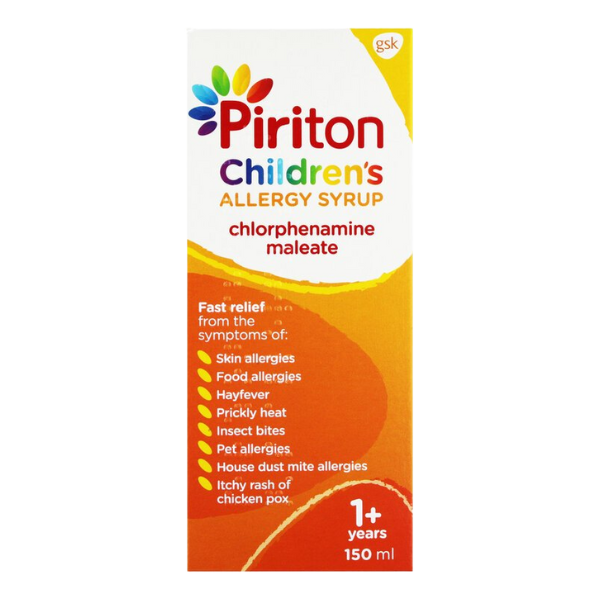
Piriton Syrup (150ml)
The perfect oral solution for seasonal allergies
- Suitable for children 1 year and over
- Relieves the itchy rash of chickenpox
- Relieves the symptoms of allergies
- An easy to consume oral solution
- Provides fast-acting relief
£5.69 Available Free Delivery on Orders over £20!
In stock
| Strength | 2mg/5ml |
| Size | 150ml |
Fast-Acting Allergy Relief for Itching, Rashes and Hay Fever Symptoms
Piriton Syrup Overview
Piriton Syrup is an antihistamine medicine used to relieve symptoms of allergic reactions, including itching, rashes, hives, hay fever and reactions to insect bites or stings. It contains chlorphenamine maleate, a first-generation antihistamine that works by blocking the effects of histamine in the body.
In the UK, Piriton Syrup is an over-the-counter pharmacy medicine, suitable for adults and children over the recommended age when used as directed.
Understanding Allergic Reactions
Why allergy symptoms occur
Allergic symptoms develop when the immune system releases histamine in response to triggers such as pollen, dust mites, animal dander or insect venom. Histamine causes itching, redness, swelling, sneezing and watery eyes.
Reducing the effects of histamine helps control these symptoms and improve comfort.
Why antihistamines are effective
Antihistamines block histamine receptors, preventing histamine from binding and triggering allergy symptoms.
What Is Piriton Syrup?
Piriton Syrup contains chlorphenamine, a sedating antihistamine that provides effective relief from a wide range of allergic symptoms. The liquid formulation allows flexible and accurate dosing, making it suitable for people who prefer or require a liquid medicine.
Piriton is often used when rapid symptom relief is needed.
How Does Piriton Work?
Histamine H1 receptor blockade
Chlorphenamine blocks H1 histamine receptors, which:
- reduces itching and redness
- relieves sneezing and runny nose
- eases skin rashes and hives
Because it crosses the blood–brain barrier, it may also cause drowsiness.
Onset and duration
Piriton typically starts working within 30–60 minutes, with effects lasting several hours.
What Piriton Helps With — and What It Does Not
What it helps with
Piriton Syrup is used to relieve:
- hay fever (seasonal allergic rhinitis)
- skin rashes and urticaria (hives)
- itching
- insect bites and stings
- allergic reactions to foods or medicines
It is suitable for short-term symptom control.
What it does not treat
Piriton does not:
- cure allergies
- treat asthma attacks
- relieve nasal congestion directly
- replace emergency treatment for severe allergic reactions
Severe reactions require urgent medical care.
Piriton Syrup Summary
Piriton Syrup (150 ml) provides effective, fast-acting relief from allergy symptoms such as itching, rashes and hay fever. When used correctly, it helps control histamine-driven reactions and improve comfort during allergic episodes.
Persistent or severe allergy symptoms should always be assessed by a healthcare professional.
Active Ingredients
Chlorphenamine Maleate
How to Take Piriton Syrup
Measure the dose carefully using a suitable measuring device. Take as directed on the packaging and space doses evenly throughout the day.
Avoid alcohol while taking Piriton due to the risk of increased drowsiness.
Safety, Warnings and Side Effects
Piriton commonly causes drowsiness, which may affect driving or operating machinery. Other side effects can include dry mouth, blurred vision or dizziness.
If excessive sedation or confusion occurs, stop use and seek advice.
When to Seek Medical Advice
Speak to a GP or pharmacist if:
- symptoms persist or worsen
- allergy symptoms are severe or recurrent
- there is swelling of the face, lips or tongue
- breathing becomes difficult
These may indicate a serious allergic reaction.
Use in Pregnancy and Breastfeeding
Piriton should be used during pregnancy or breastfeeding only on professional advice, as antihistamine use should be assessed individually.
Who Is Piriton Syrup For?
Piriton Syrup may be suitable for:
- adults and children over the recommended age
- people with itchy skin or allergic rashes
- individuals needing liquid antihistamine dosing
A pharmacist can advise on appropriate dosing.
Who Should Avoid Piriton
Piriton should not be used if:
- you are allergic to chlorphenamine
- you have severe liver disease without advice
- you are taking other sedating medicines without guidance
Caution is advised in older adults and people with glaucoma or prostate enlargement.
How Piriton Compares to Other Antihistamines
Piriton vs non-drowsy antihistamines
Non-drowsy antihistamines are preferred for daytime use. Piriton may be chosen when sedation is acceptable or when other antihistamines are ineffective.
Piriton vs topical allergy treatments
Topical treatments act locally. Piriton provides systemic relief for widespread symptoms.
At Elite Meds, we provide simple, reliable and fast delivery for all orders. We use Royal Mail exclusively, based on consistent performance and strong customer satisfaction across our website and eBay stores.
Delivery Options
Royal Mail Tracked 48 – £3.99
Royal Mail Tracked 24 – £4.49
Delivery timeframes are estimates provided by Royal Mail and are not guaranteed.
Dispatch Times
- Orders placed before 3pm Monday to Friday are dispatched the same working day.
- Orders placed after 3pm, on weekends or bank holidays are dispatched the next working day.
See our full delivery policy here
You May Like These
View All

Reviews (0.0/5 stars based on 0 reviews)
There are no reviews yet.